
“Go Live” TDMT Replaces cFolders/PDMI
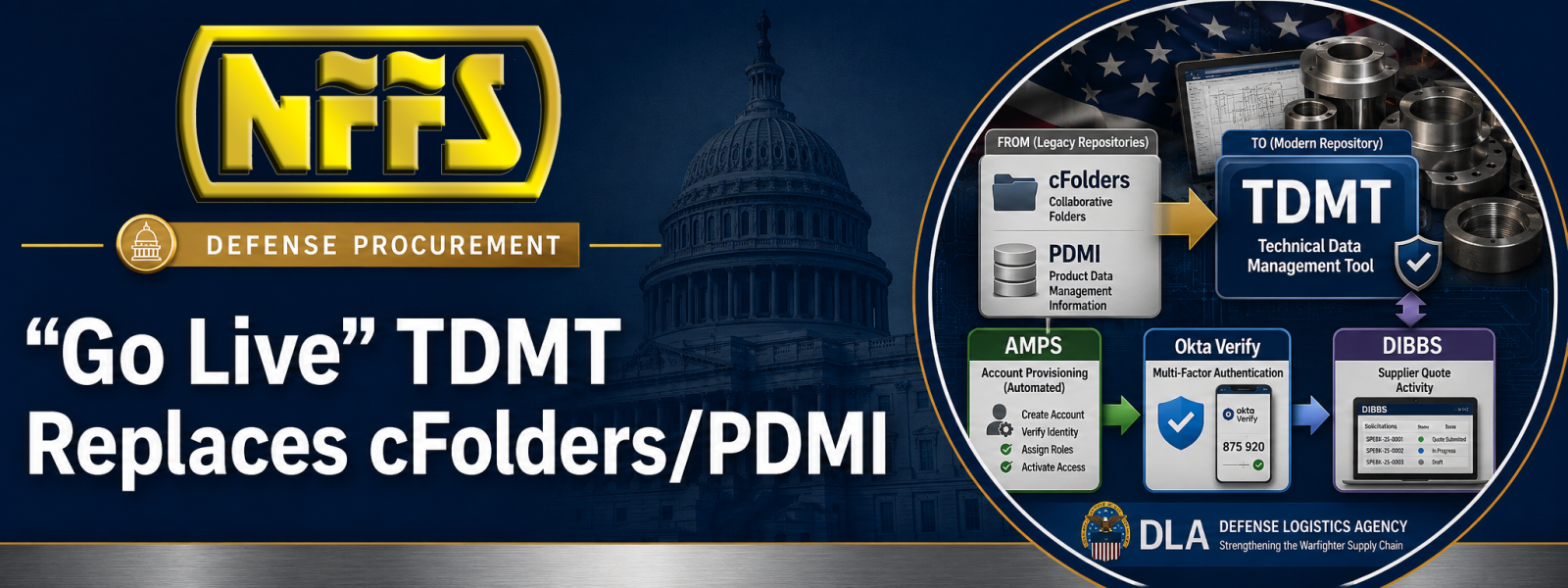 The Defense Logistics Agency has transitioned from the legacy cFolders/Product Data Management Initiative system to the new Technical Data Management Transformation system, known as TDMT.
DLA has stated that TDMT has replaced cFolders as the repository and access point for technical documents. This means companies that previously relied on cFolders or PDMI to retrieve Technical Data Packages must now prepare to access the TDMT environment through DLA’s updated access process.
Why DLA Is Moving to TDMT
The move to TDMT is part of DLA’s broader effort to modernize technical data management and improve the speed, accuracy, and efficiency of item management. DLA has described the transformation as an automated technical data management approach intended to support a faster and more efficient process for managing the technical data that supports DLA procurement and sustainment activity.
For industry, the impact is straightforward: suppliers must understand the new access path, ensure their users are properly registered, and be prepared to retrieve technical data through TDMT rather than the prior cFolders/PDMI process.
What Is Changing for Suppliers
Under the former process, vendors often accessed TDPs and bid sets through cFolders, either directly or through links associated with a quote or request for proposal in DIBBS.
TDMT changes the access point. DLA’s supplier guidance now identifies TDMT as the replacement repository for technical documents, and vendor users requiring technical data must register through DLA’s Account Management and Provisioning System, known as AMPS.
This does not change the importance of reviewing technical data before bidding. It does, however, mean that companies need to confirm that their personnel can successfully log in, authenticate, and retrieve the required documents before quote deadlines approach.
Access Requirements: AMPS and Okta MFA
Suppliers should be aware of two key access requirements:
First, supplier-users must have access through AMPS. AMPS is DLA’s system for requesting and provisioning access to DLA applications. Companies should not assume that a prior cFolders login or DIBBS familiarity automatically provides access to TDMT.
Second, DLA uses Okta for single sign-on and multi-factor authentication. External users may be required to use Okta Verify or another approved authentication method as part of the login process. Users should set this up before they need urgent access to a TDP.
Suppliers should identify who in their organization needs TDMT access, including estimators, contracts personnel, quality personnel, engineers, and production planning staff. Each user should have their own authorized account. Shared accounts, credential sharing, or access by unregistered users should not be used.
What Suppliers Should Do Now
Companies that pursue DLA work should take the following actions immediately:
- Identify all employees who need access to technical data for quoting, engineering review, quality planning, or contract performance.
- Confirm that each user has an AMPS account or begins the AMPS registration process.
- Complete DLA Okta/MFA setup before trying to access urgent solicitation documents.
- Review any available DLA TDMT training materials and user guides.
- Test access before a live quote deadline, especially for solicitations that require detailed review of drawings, bidsets, specifications, source control documents, or export-controlled data.
- Maintain internal controls for technical data access, especially where export-controlled or restricted technical data may be involved.
- Continue to monitor solicitations and solicitation instructions for how technical data access is handled for each opportunity.
Important Compliance Reminders
Technical Data Packages often contain controlled, restricted, proprietary, or export-controlled information. Suppliers should treat TDMT access the same way they treated cFolders access: as access to government-controlled technical data that must be protected.
Users should not share credentials, forward restricted technical data to unauthorized parties, scrape or mass-download technical data, or use automated tools to collect files. Companies should also confirm that their Joint Certification Program status, export control controls, cybersecurity practices, and internal document handling procedures are current and aligned with the requirements of the solicitation and the data being accessed.
If a TDP appears incomplete, illegible, missing documents, or requires additional permissions such as a license agreement, suppliers should follow DLA’s customer support process for technical data or Product Data Management Division support rather than assuming the package is unusable.
Why This Matters to Foundries, Forgers, and Machine Shops
For casting, forging, and machining suppliers, TDP access is often the first step in determining whether a DLA opportunity is a good fit. Drawings and technical data help suppliers evaluate material requirements, tolerances, tooling needs, quality clauses, inspection requirements, special processes, delivery risks, and whether source approval or additional engineering review may be required.
Delayed access can result in missed quotes, incomplete pricing, misunderstood requirements, or avoidable no-bid decisions. Companies that prepare their TDMT access early will be in a stronger position to review opportunities quickly and respond to DLA solicitations on time.
Bottom Line
TDMT is now the DLA system replacing cFolders/PDMI for access to technical documents and TDPs. Suppliers should not wait until a quote deadline to register, authenticate, or troubleshoot access. The best approach is to identify required users, complete AMPS registration, set up Okta MFA, review TDMT training, and test access early.
For industry, the message is simple: technical data access is changing, but the business need remains the same. Suppliers that understand the TDMT process and prepare their teams now will be better positioned to compete for DLA opportunities and support the defense supply chain.