
Building the Next Foundry Generation, One Race Car at a Time
Something magical occurred when one person thought to ask, "What happens when you get kids into engineering?" What you get is a fantastic mix of metal casting, additive manufacturing, and speed racing.
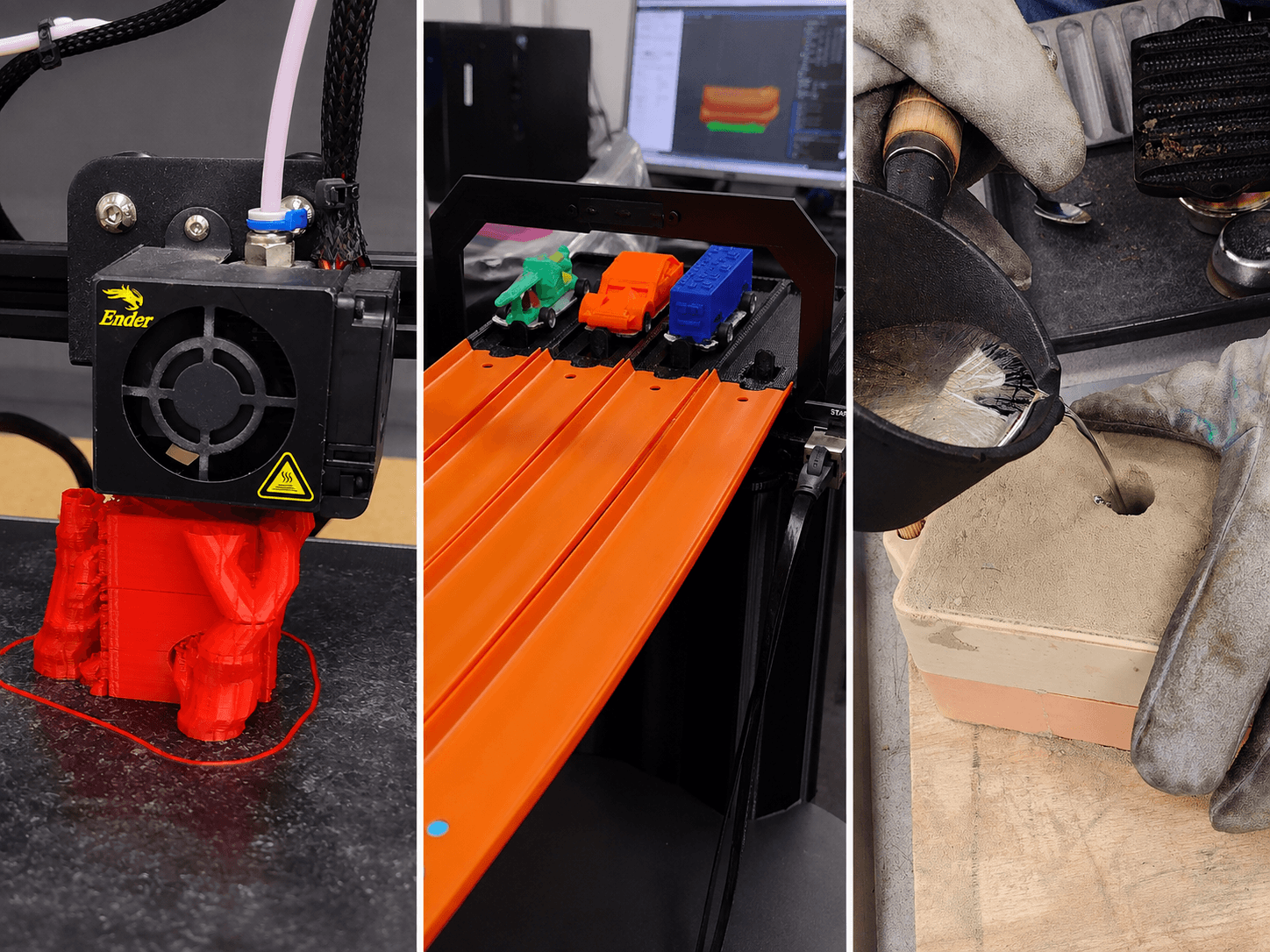
I had the opportunity to shadow one day of the four day course, Resin and Metal Mastery, held at Joliet Junior College. This level two course, taught by Joe Costabile, is open to kids aged 13 to 17 and mixes metal casting, CAD design, and 3D printing in a way so fun, you almost forget that you are learning. The course builds on skills the students learned in a level one course, familiarizing themselves with CAD to expand on a basic sedan car body. They design and print different versions of the car body, with a line of 3D printers churning out the different designs. There is a molding station, where the kids have to hand pack their molds with sand, often finding it crumble under their fingers when they have not packed it tight enough. Costabile has the melting station set up in the front, donning thick gloves to pour into the line of molds. The students perform their own knockout, poking and shaking their car bases out into the tub of sand. Once everything cools down, they attach their fantastical bodies to the base, before sending their cars down a four lane race track, complete with automated start and electronic timing.
The hands on aspect helps make engineering not only real for the youth, but can be their first exposure to the industry. Inspired by his own educational experience, Costabile, who is the Alumni Engagement Ambassador for the Foundry Education Foundation, wants to be that person who exposes the next generation to engineering.
"In high school, I had a shop teacher that taught everything. Metal, wood, you name it. For me, I was hooked for life when I worked with metal. If I didn't have that teacher that exposed me to the industry, I would never have known it was an option," Costabile said. "For a lot of people, if you don't have exposure to the field or have it in your blood with family who works in it, you are not going to know it's there. I want to be that guy that shows them this is here."
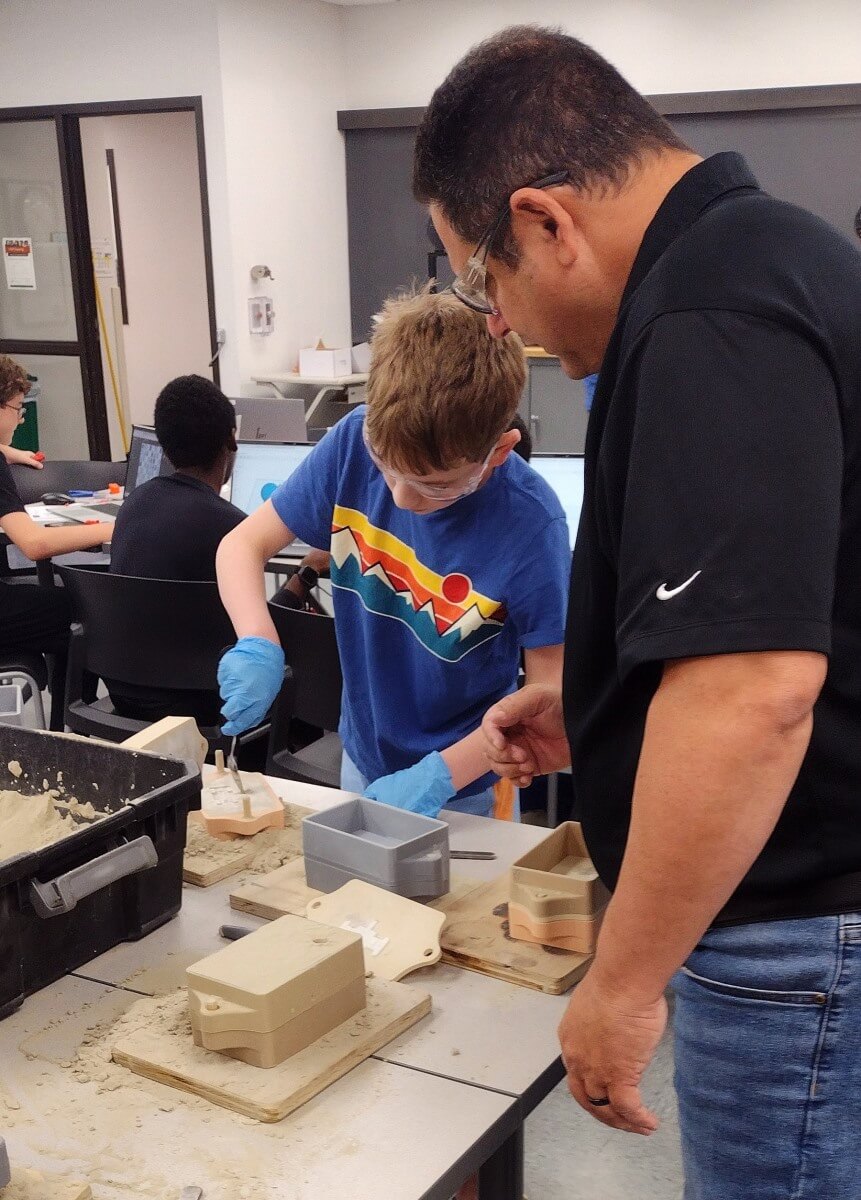 Costabile is on to something. The workforce shortage in the metal industry is not going away anytime soon, and that is why it is crucial to connect with the youth now. Not only to ensure the longevity of the industry, but also to lead to innovation. "The more people who come into the industry, the more we move forward."
The course goes beyond the hands-on skills. Costabile also covers entrepreneurship and possible career paths, showing the students different roles they can enter with varying levels of education, from straight out of high school to post college. And he does not focus only on the technical roles. "The industry still needs front of house. People to work in sales, marketing, HR. We want these kids to tell their friends that they can go into that. The more knowledge of foundries, the better."
The classes have the opportunity to reach not only the students, but their parents as well. Hanging around during pick up, some of the parents hovered as they watched their child finish up for the day, adding a final design in CAD or making sure the printer was on track to have their design ready for tomorrow. Each one had a bewildered look on their face, joy at seeing their child so engrossed mixed with confusion about how to help them move forward. One parent asked about next steps, schools to check out or jobs that would fulfill this hands-on creativity. Costabile provided incredible guidance, teaching the parent to ask the right questions and, most importantly, to listen to what interests their child.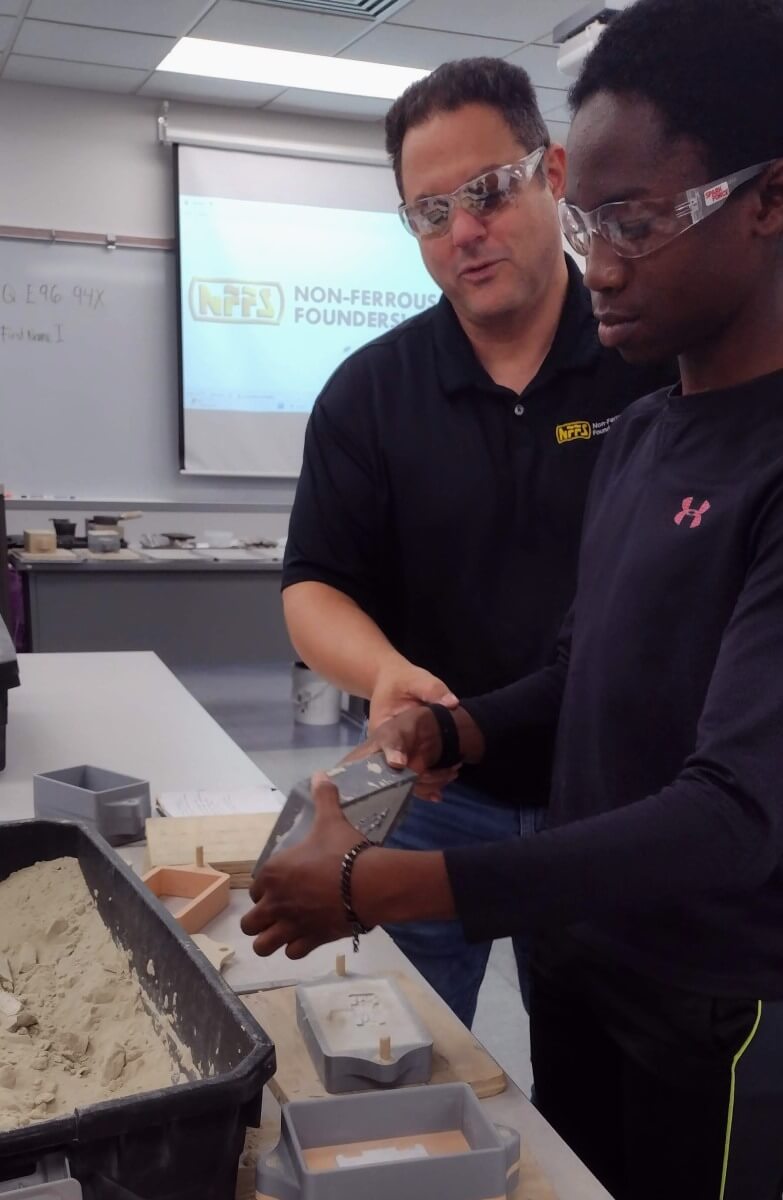
How can your foundry get involved and spark this interest in your community? Are classes like this happening near you already? If not, your foundry could help start one, or simply sponsor one by providing materials.
Getting involved does not require building a full program from scratch. Some foundries open their doors for a single tour and let students see the process firsthand. Others partner with a local school or community college to bring in equipment for a hands-on day, similar to what Costabile does at Joliet Junior College. Even smaller gestures make a difference, donating scrap material for a class project, sending an employee to talk about their career path, or simply reaching out to a nearby program to ask what they need.
The point is not to recreate this exact course. It is to find the version that fits your foundry and your community, and to show up. The kids who leave a class like this excited about engineering are the same kids who could be walking into your foundry in a few years, if they know it is an option for them.