
New Connections, Shared Ideas: NFFS at the Build Freedom Summit
Building the Workforce Starts with Showing Up
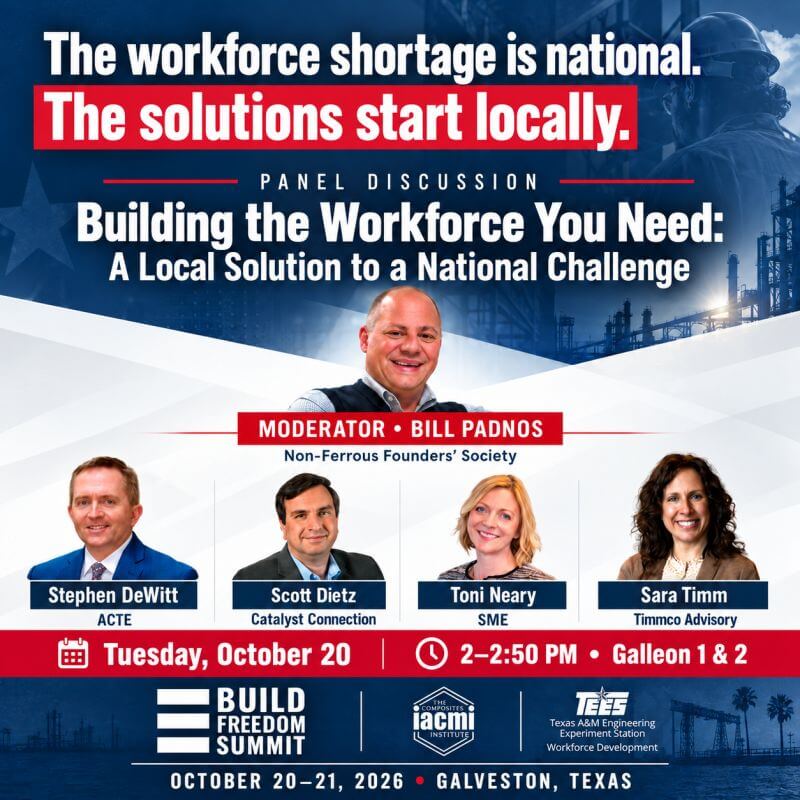 The workforce shortage is a national issue, but the solutions begin locally. That message was at the heart of my participation in the Build Freedom Summit, held October 20–21 in Galveston, Texas. Bringing together manufacturing, education, workforce development, and government leaders, the Summit offered an opportunity to learn from people working toward a shared goal: building the workforce needed to strengthen American manufacturing and our defense industrial base.
I attended wearing three hats, as NFFS Director of Workforce Development, chair of the METAL Advisory Network, and Network Coach for the NFFS Talent Pipeline Program cohort. Each role provided a different connection to the Summit, but all three shared the same purpose: helping manufacturers build the workforce they need to succeed.
IACMI–The Composites Institute was a major contributor to the conference, and its involvement made attending particularly important in my role with METAL. The Summit was an opportunity to support IACMI’s workforce development efforts, connect with partners, and ensure that metalcasting was represented in the broader conversation about America’s manufacturing capabilities.
TMG leadership also attended and spoke at the conference, promoting the Talent Pipeline Program and its new involvement with Build Freedom. Their participation reinforced the importance of helping employers improve how they recruit, hire, onboard, and retain their employees. As Network Coach for the NFFS cohort, I appreciated the opportunity to connect with the TMG team and discuss how these efforts can help more manufacturers take an active role in developing their workforce.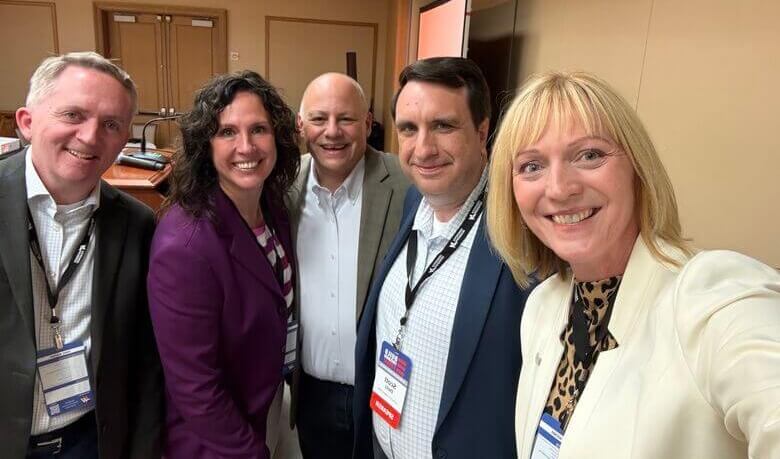 One of the highlights was moderating “Building the Workforce You Need: A Local Solution to a National Challenge,” featuring Stephen DeWitt, Toni Neary, and Sara Timm. This was an all-star panel of workforce development professionals who understand what it takes to connect employers, educators, and students. We kept the session focused on conversation and practical solutions, without PowerPoint presentations. The goal was to give attendees ideas they could bring back to their own communities and put to work.
Our discussion reinforced a point I make often: a national program can provide resources, structure, and support, but employers still need to build relationships in their own communities. Someone has to reach out to the school, invite the educator into the facility, introduce students to the opportunities, and follow through after that first conversation. Meaningful workforce development requires an ongoing commitment from the companies that need the talent.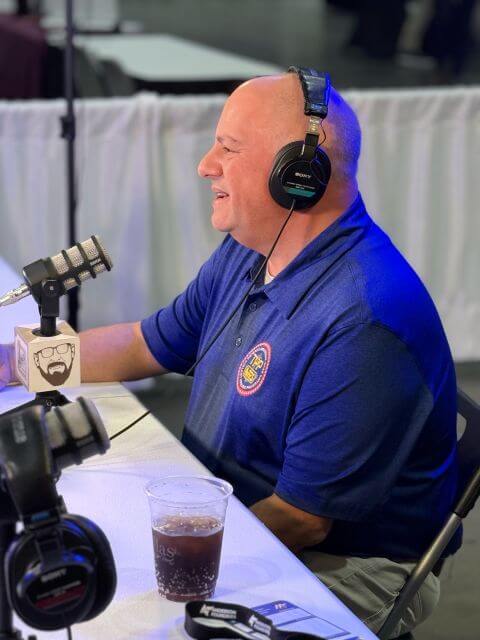 I also had the opportunity to be interviewed at the Industrial Talk podcast exhibit area about Cast Your Future and the work NFFS and our industry partners are doing to connect the next generation with careers in metalcasting. It was a chance to share our industry’s story with a broader audience and explain why introducing students, parents, and educators to metalcasting matters. Through Cast Your Future, we are giving foundries resources to help start those conversations and show young people the career opportunities available in their own communities. The interview brought our panel’s message into focus: industry-wide collaboration can support outreach, but the connections happen when individual companies get involved locally.
Moderating the panel and participating in the interview were only part of the value of attending. Listening to the sessions provided opportunities to consider different approaches to familiar challenges. The program covered topics ranging from apprenticeships and student engagement to talent acquisition, retention, and the skills needed for advanced manufacturing. For NFFS, those conversations matter because our members need practical ways to strengthen their workforce. Learning how others approach these challenges helps me better evaluate the resources and partnerships we can bring to foundries.
Just as valuable were the conversations with attendees between sessions and during networking events. Being in a room with people who share a commitment to workforce development creates opportunities to compare experiences, ask questions, and make connections that are difficult to develop through email alone. Meeting with exhibitors added another dimension, providing time to learn about their programs and services and explore how they might support the needs of our industry.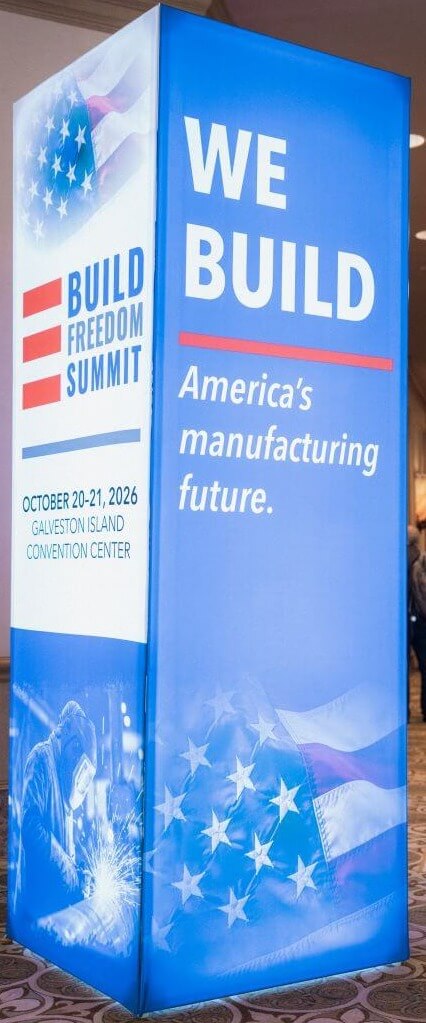 I would have welcomed more industry representatives in the audience for these discussions. Employers have an essential voice in this work, and their participation helps ensure that education and workforce initiatives address what companies actually need. These events are also an opportunity for manufacturers to discover that they do not have to tackle every workforce challenge on their own.
I left Galveston with new connections, ideas to consider, and a renewed appreciation for the importance of showing up. Whether representing NFFS, supporting METAL, or working alongside our Talent Pipeline Program partners, my responsibility is to bring those connections and ideas back to our industry. The value of attending continues through the follow-up: making introductions, sharing resources, and helping foundries turn a national workforce conversation into local action.