
When the Heat Rises, Safety Can't Take a Break
As much of the country experiences another summer of record-breaking temperatures, most people check the weather before heading outside. In a foundry, however, the forecast only tells part of the story.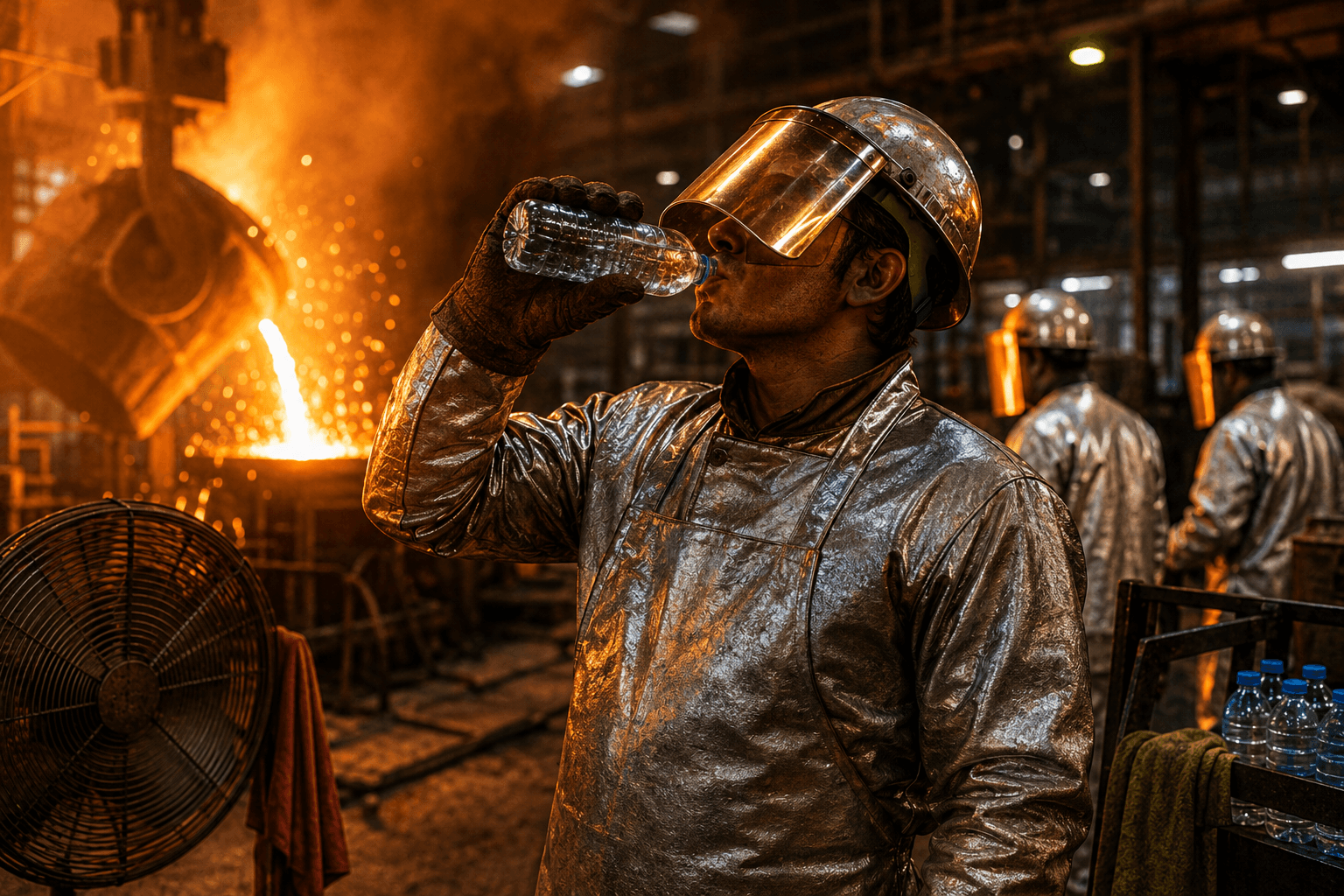
Long before the National Weather Service issues a heat advisory, foundry employees may already be working in environments where radiant heat from furnaces, molten metal, ladles, die casting equipment, and heat treat operations create conditions far more severe than the ambient outdoor temperature. Add flame-resistant clothing, physically demanding work, and humidity, and the risk of heat-related illness increases dramatically.
For EHS professionals, extreme heat is not simply a seasonal concern. It is one of the most predictable and preventable hazards of the year.
While OSHA has not yet finalized a federal Heat Injury and Illness Prevention Standard, heat-related enforcement remains a priority under the General Duty Clause. Employers are expected to identify heat hazards, implement reasonable controls, train employees, and respond appropriately to heat-related illnesses.
Foundry Heat Requires a Different Approach
Traditional heat index calculations do not account for the intense radiant heat generated inside a foundry. Employees working near furnaces, casting lines, die casting cells, or heat treat equipment may experience temperatures far beyond what the weather report indicates.
That means supervisors should base work-rest schedules and protective measures on actual working conditions, not simply the outdoor forecast.
Hydration also needs to be proactive. Employees should have unrestricted access to cool water and be encouraged to drink approximately 8 ounces every 15 to 20 minutes, even if they are not thirsty. Many foundries also provide electrolyte replacement beverages during periods of prolonged heat exposure.
NFFS Resource: Members can reinforce these practices using the Foundry Safety Training Library, which includes foundry-specific OSHA training materials, many available in both English and Spanish.
Acclimatization Can Prevent Serious Injuries
One of the highest-risk groups every summer is not experienced employees. It is new hires, temporary workers, contractors, and employees returning after extended time away.
The body needs time to adapt to high-heat environments. A structured acclimatization program should gradually increase exposure over the first week. A common best practice is limiting new or returning employees to approximately 20% of normal heat exposure on Day One, increasing by roughly 20% each day until they reach a full workload.
PPE Protects Workers, But It Also Traps Heat
Aluminized jackets, aprons, hoods, infrared-reflective face shields, and flame-resistant clothing are essential for protecting employees from radiant heat and molten metal. Cooling vests can also help reduce physiological heat stress during extended work near furnaces.
Just as important is what employees wear underneath their PPE.
Recommended base layers include:
- Lightweight 100% untreated cotton
- Lightweight merino wool
- Inherently flame-resistant moisture-wicking fabrics designed for industrial environments
One reminder cannot be overstated. Synthetic athletic clothing, including polyester, nylon, and spandex, should never be worn beneath foundry PPE. If exposed to molten metal, these materials can melt directly onto the skin, dramatically increasing burn severity.
Engineering Controls Still Deliver the Greatest Protection
Administrative controls are important, but engineering controls remain the most effective long-term solution.
Foundries should continue evaluating:
- Ventilation and local exhaust systems
- Heat shields and reflective barriers
- Improved airflow throughout production areas
- Air-conditioned recovery rooms or cool zones
- Industrial fans and spot cooling where appropriate
Even modest improvements can significantly reduce employee heat strain over the course of a shift.
Recognize Heat Illness Before It Becomes an Emergency
Every supervisor should know the difference between heat exhaustion and heat stroke.
Heat exhaustion often includes heavy sweating, dizziness, headache, nausea, fatigue, and rapid pulse. Employees should immediately move to a cool area, begin hydration, and be medically evaluated before returning to work.
Heat stroke is a life-threatening emergency. Warning signs include confusion, slurred speech, loss of consciousness, seizures, body temperatures above 103°F, and hot skin. If heat stroke is suspected, call 911 immediately, begin aggressive cooling, and never leave the employee unattended.
A formal buddy system is another simple but highly effective safeguard. Changes in behavior or confusion are often recognized by coworkers before the affected employee realizes something is wrong.
NFFS Safety Tip: Schedule a 15-minute summer safety stand-down focused on hydration, acclimatization, emergency response procedures, and recognizing the signs of heat illness. Short refresher sessions before the hottest weeks of the year can make a meaningful difference.
Strong Programs Protect Employees and Employers
An effective heat illness prevention program should include written procedures, acclimatization guidelines, supervisor responsibilities, hydration and work-rest schedules, emergency response procedures, employee training, and daily heat hazard assessments.
Just as importantly, documented programs demonstrate due diligence during OSHA inspections and help ensure supervisors respond consistently across every shift.
NFFS Resources: Members do not have to build these programs alone. NFFS provides Foundry-Specific OSHA Compliance Templates to help develop written safety programs, the Foundry Safety Audit Program to identify potential compliance gaps before OSHA does, and a 24/7 EHS & Regulatory Hotline staffed by professionals who understand foundry operations and can answer questions about heat illness prevention, documentation, PPE, and OSHA expectations.
Heat illness prevention is not just about getting through the hottest days of summer. It is about building systems that protect employees every day.
To learn more about these and dozens of other member resources, visit www.nffs.org