
No One Teaches You To Lead
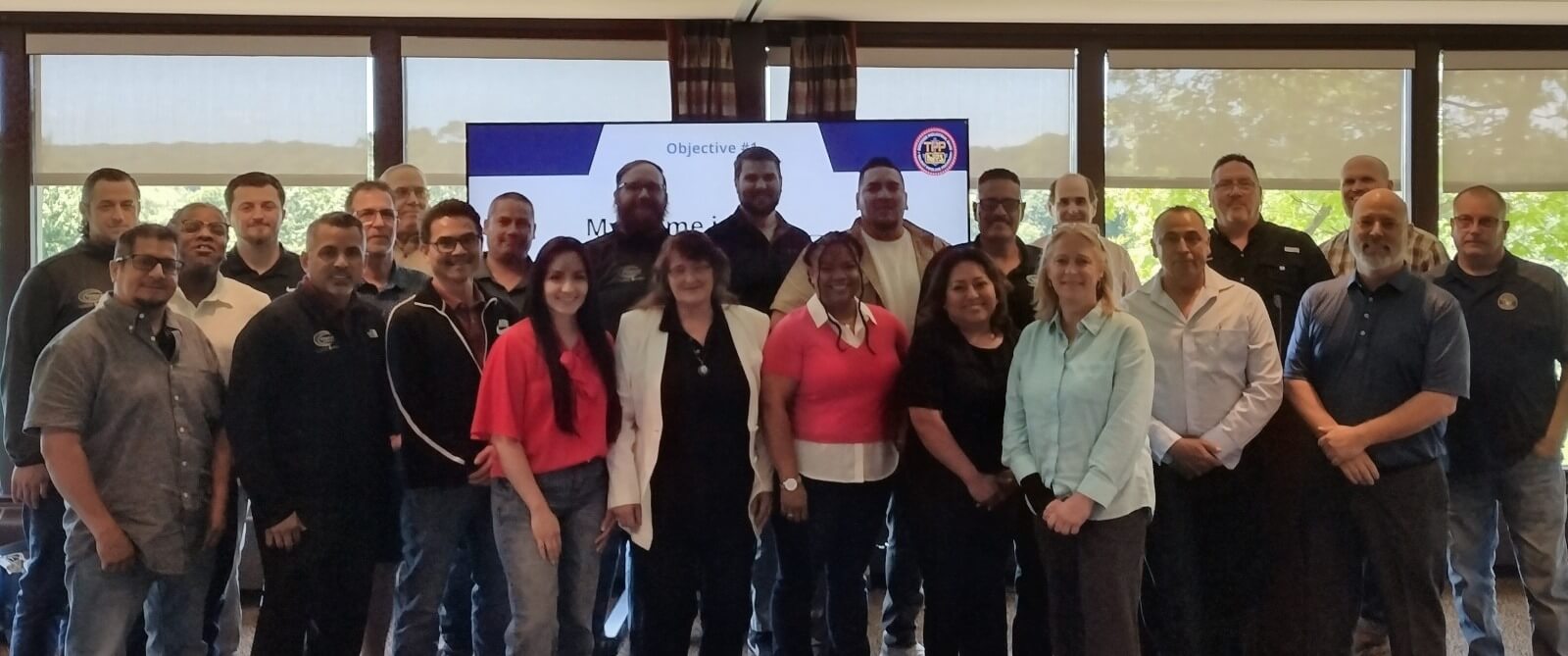 Premier Aluminum Leader New Hire Retention Training, Racine WI June 19th, 20226
No one teaches you to be a leader. As children, we are taught to be led — following our parents' example for everyday things, doing what Simon Says in playground games, walking in lines and just repeating "follow the leader." For most of our lives, leaders are simply people who are older than us or have more experience than us. It is just a role we all assume we would take on after putting in our time. Start in your entry-level job, put your head down, work for a decade, do well in your reviews, and then you can start to have more responsibility.
Nowhere in that timeline are we shown what it means to be a leader, let alone what it means to be a good one. And it turns out that being good at your job does not make you one. Shelly Hewitt, Human Resources Manager at Premier Aluminum in Racine, Wisconsin, put it plainly:
"The reinforcement of the concept that a good worker is not necessarily a good employee, or a good leader, was huge. I've always thought we need those employees who just come to work, do their job, and go home — low maintenance but productive. I do see how they can bring a team down, so we as a company need to provide a culture where those employees want to be more engaged and a culture to keep engaged employees engaged. The work doesn't end when we check the box saying an employee is engaged."
That gap between performance and leadership is exactly what the U.S. Navy Talent Pipeline Program's Leader New Hire Retention Training is built to close. The TPP is built around helping small and medium manufacturers strengthen their talent acquisition and retention strategies, and this training puts something specific at the center of that work: the leader. It is designed to help leaders who want to lead build high-performance teams, and to give them the tools and courage to get there.
Premier Aluminum recently brought a group of 26 leaders and managers through the training, and the experience landed differently than many of them expected.
Shelly came away with a new way of looking at her own leadership team. Watching them during the training gave her a different perspective. "It is easy to think someone is engaged if you are friends with them, or if they provide the work and support you need," she said, "but until you really sit down and think about it, you may not see that they are not engaged, or that their level of engagement could certainly increase." The follow-on question she found herself sitting with was a hard one: how can leaders develop a team of engaged employees if they are not engaged themselves?
She also came away with a reminder about how much the small moments matter. "Walking by and saying good morning to everyone is so easy, but sometimes just walking to your destination without acknowledging anyone feels easier, and has a much stronger negative impact. We need to be conscious of how we treat everyone, not just our immediate team."
Russ Detiege, General Manager at Premier Aluminum, walked in expecting an informational training and walked out describing it as something more.
"My perspective changed in a meaningful way. What stood out was how practical and actionable the content was, particularly around building high-performance teams and clearly defining expectations between leaders and their teams. The emphasis on alignment, trust, and ownership, paired with tools like the 'what leaders expect vs. what the team expects' framework, made it much more tangible than a typical training."
That practicality extended to how he thinks about retention now. "The reminder that high-performing teams are built on trust, not just results, was powerful," he said. "It reinforced that consistent communication, follow-through, and respect are non-negotiables if you want to build a culture where people are motivated and committed to their work." One of the bigger shifts for him was recognizing who owns that work. The training reinforced that retention and engagement are not just HR initiatives — they are leadership responsibilities at every level.
The mindset shift he came away with is one the training is specifically designed to produce. "Keeping good people isn't just about hiring right," Russ said. "It's about how we lead, how we communicate, and how we develop our teams every day. Culture is intentionally built through consistent communication, follow-through, and respect. Trust and engagement are critical drivers of performance, and retention is ultimately a reflection of how effectively leaders develop, support, and connect with their teams."
Strong leadership does not happen by accident, and it does not come automatically with a title or tenure. It is something that has to be learned, practiced, and consistently reinforced, and the Leader New Hire Retention Training gives foundry leaders a real place to start.