
EU Parliament Approves Legislation Implementing U.S.-EU Turnberry Trade Framework
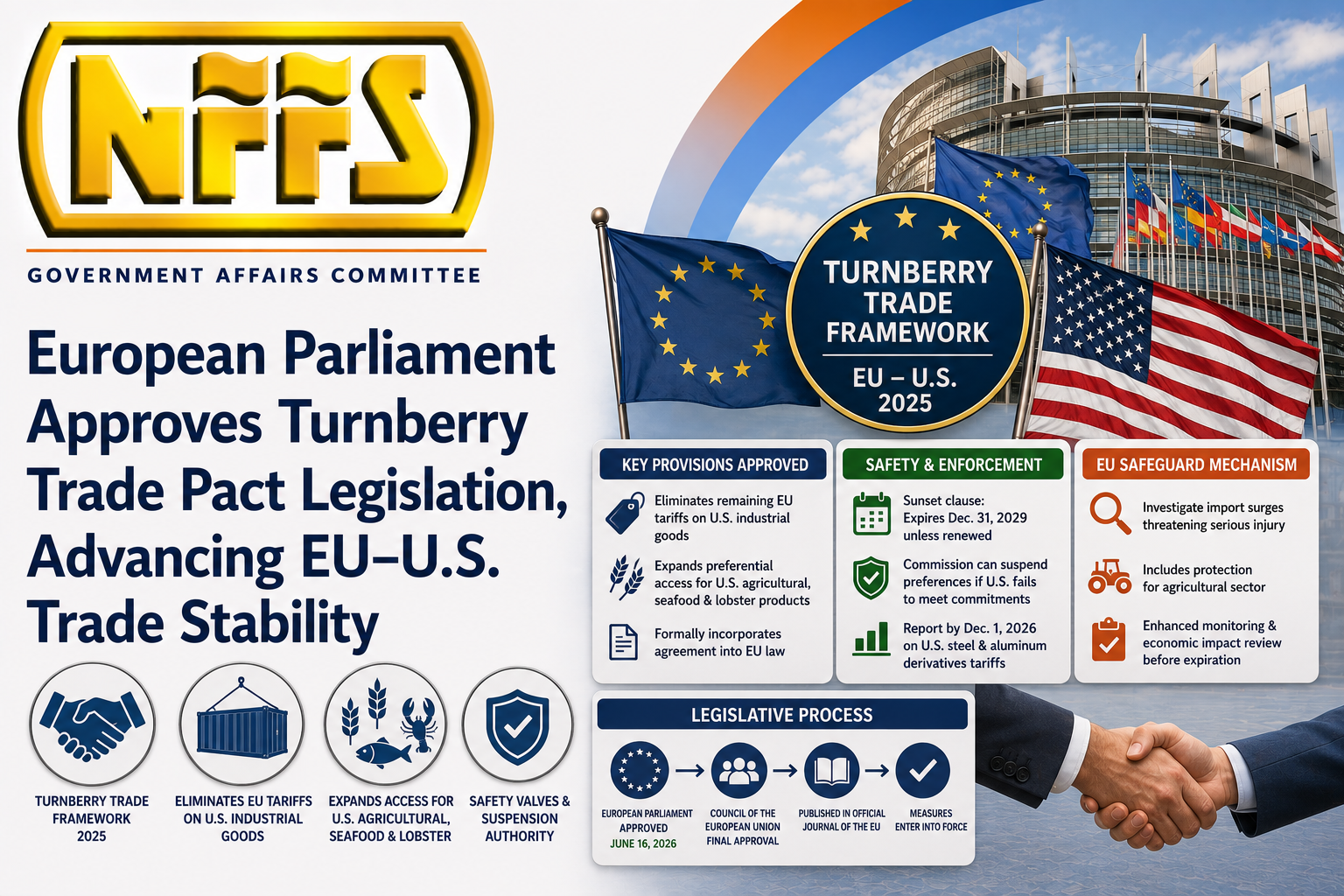 The European Parliament has approved legislation implementing the tariff-related commitments contained in the 2025 Turnberry trade framework between the European Union and the United States, clearing a major hurdle in efforts to stabilize transatlantic trade relations and avoid a renewed tariff dispute. On June 16, 2026, in a 440-151 vote lawmakers adopted two measures that eliminate remaining EU tariffs on U.S. industrial goods, expand preferential access for certain U.S. agricultural, seafood, and lobster products, and formally incorporate the agreement into EU law.
The parliamentary vote comes after months of negotiations over safeguards and enforcement mechanisms. President Trump had warned that U.S. tariffs on European automobiles could increase from 15 percent to 25 percent if the agreement was not implemented by July 4, adding pressure on EU institutions to complete the legislative process.
The final legislation includes several provisions sought by Parliament during negotiations. A sunset clause will automatically terminate the tariff preferences on December 31, 2029, unless renewed. The European Commission also received authority to suspend tariff preferences if the United States fails to uphold key commitments under the agreement. In particular, the Commission may withdraw concessions if U.S. tariffs on EU steel and aluminum derivative products remain above 15 percent after December 31, 2026. The Commission must also report to Parliament and member states by December 1, 2026, on U.S. tariff treatment of those products.
In addition, the legislation establishes a safeguard mechanism allowing the EU to investigate and respond to import surges that threaten serious injury to European industries, including the agricultural sector. Parliament also strengthened review and oversight requirements, including periodic monitoring of trade flows and a comprehensive assessment of the agreement’s economic effects before its scheduled expiration.
The legislation now moves to the Council of the European Union for final approval. Once adopted by member states and published in the Official Journal of the European Union, the measures will enter into force.