
Employee or Mercenary?
Stop Hiring Mercenaries. Start Building Talent.
Recently, while driving along the Pennsylvania Turnpike, I passed a billboard for a manufacturing company looking for employees.
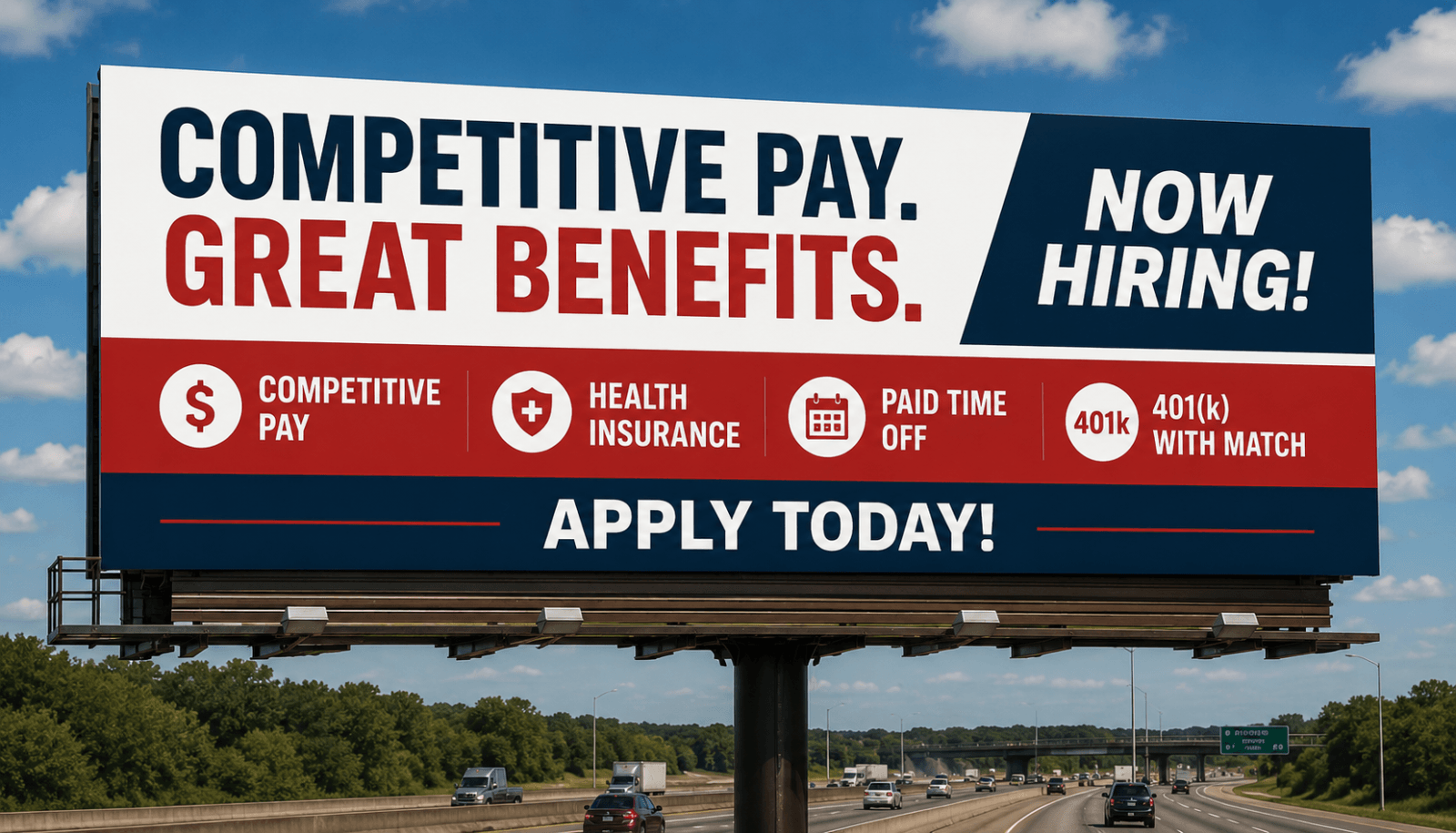 The message was simple: "Competitive Pay. Great Benefits. Hiring Now."
That was it.
No mention of the company's culture. No mention of its people. No explanation of what makes it a great place to work. No story about the products they make or the impact they have on their customers and community.
Just money.
As I drove past, I found myself asking a simple question: Is that really how you want to build your workforce?
There is no question that compensation matters. People deserve fair pay and good benefits. Every company must remain competitive in the marketplace. But when pay becomes the only message, it often becomes the only reason someone applies.
When you attract people solely because of a paycheck, you create a transactional relationship. Employees come because of the money and they leave because of the money. The moment another company offers a little more per hour, a signing bonus, or a slightly better benefits package, they are gone.
That is not a workforce strategy. It is an endless bidding war.
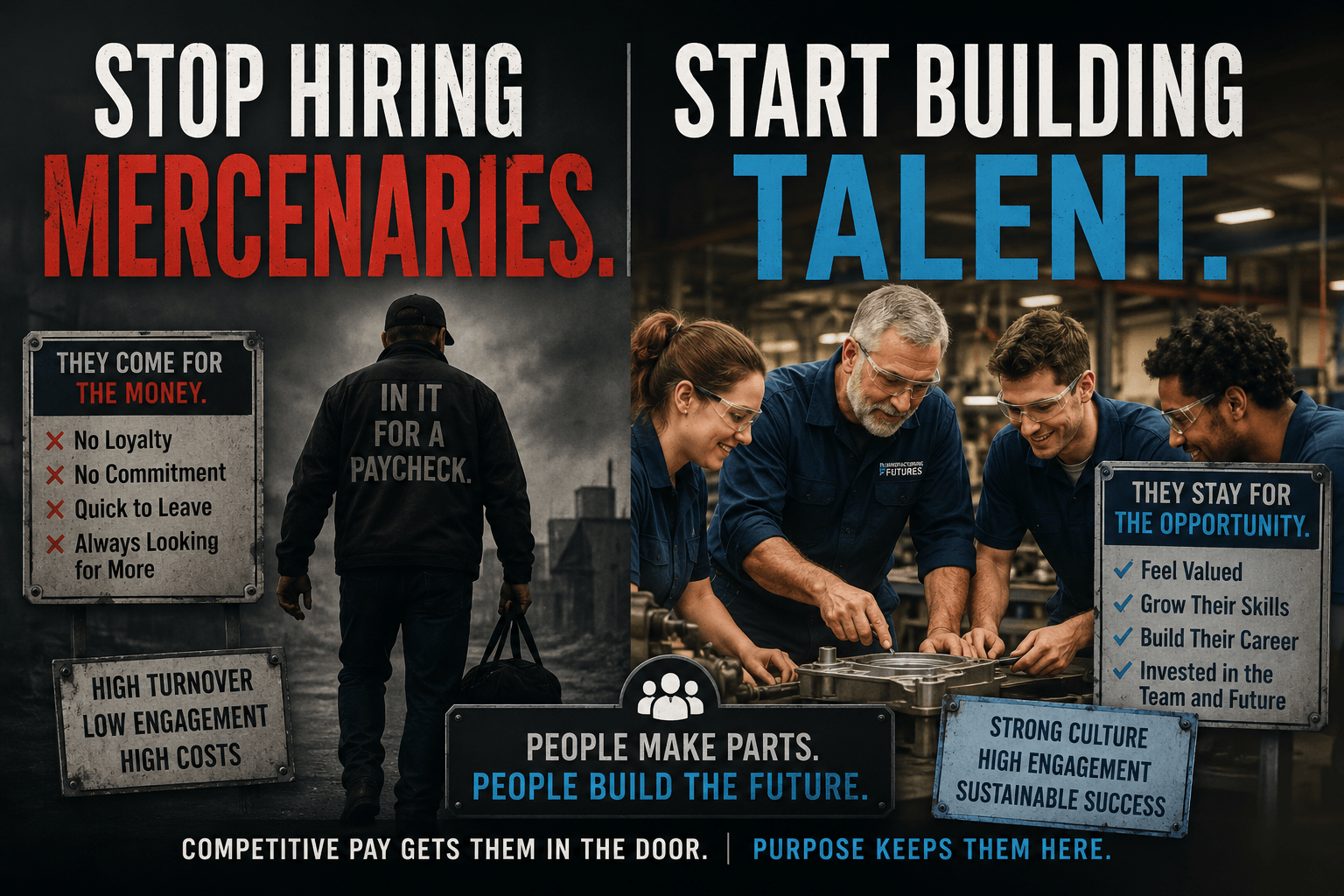 The best employees are looking for more than a job. They want to know what a company stands for. They want to know whether they will be respected, challenged, developed, and given opportunities to grow. They want to work alongside people who care about their success and contribute to something meaningful.
This is why the philosophy of "Hire for Fit. Train for Skill. Retain for Life." remains so powerful.
Most technical skills can be taught. Foundry processes can be learned. Equipment can be mastered. What is much harder to teach is attitude, curiosity, accountability, teamwork, and a desire to contribute.
The companies that consistently build strong teams understand this distinction. They focus on finding people who align with their values and culture, then invest in helping them develop the skills necessary to succeed. Over time, these employees become more than workers. They become advocates for the company, ambassadors in the community, and leaders within the organization.
Unfortunately, many employers continue to rely on recruiting tactics that do little to build that kind of connection. They spend thousands of dollars on job boards, billboards, and "Help Wanted" signs while investing very little in becoming known as a great place to work.
The reality is that most young people, parents, teachers, and job seekers know very little about manufacturing companies in their communities. If the first time someone hears about your company is when they see a job posting, you have already missed countless opportunities to build awareness and trust.
The companies that stand out today are the ones that are visible long before they have an opening to fill.
They are speaking in classrooms, hosting student tours, participating in career fairs, supporting local events, and building relationships with educators. They are telling their story through their employees and demonstrating their commitment to the community. They are helping students understand that manufacturing offers rewarding careers with opportunities for growth and advancement.
These activities may not produce an applicant tomorrow morning, but they create something far more valuable: reputation.
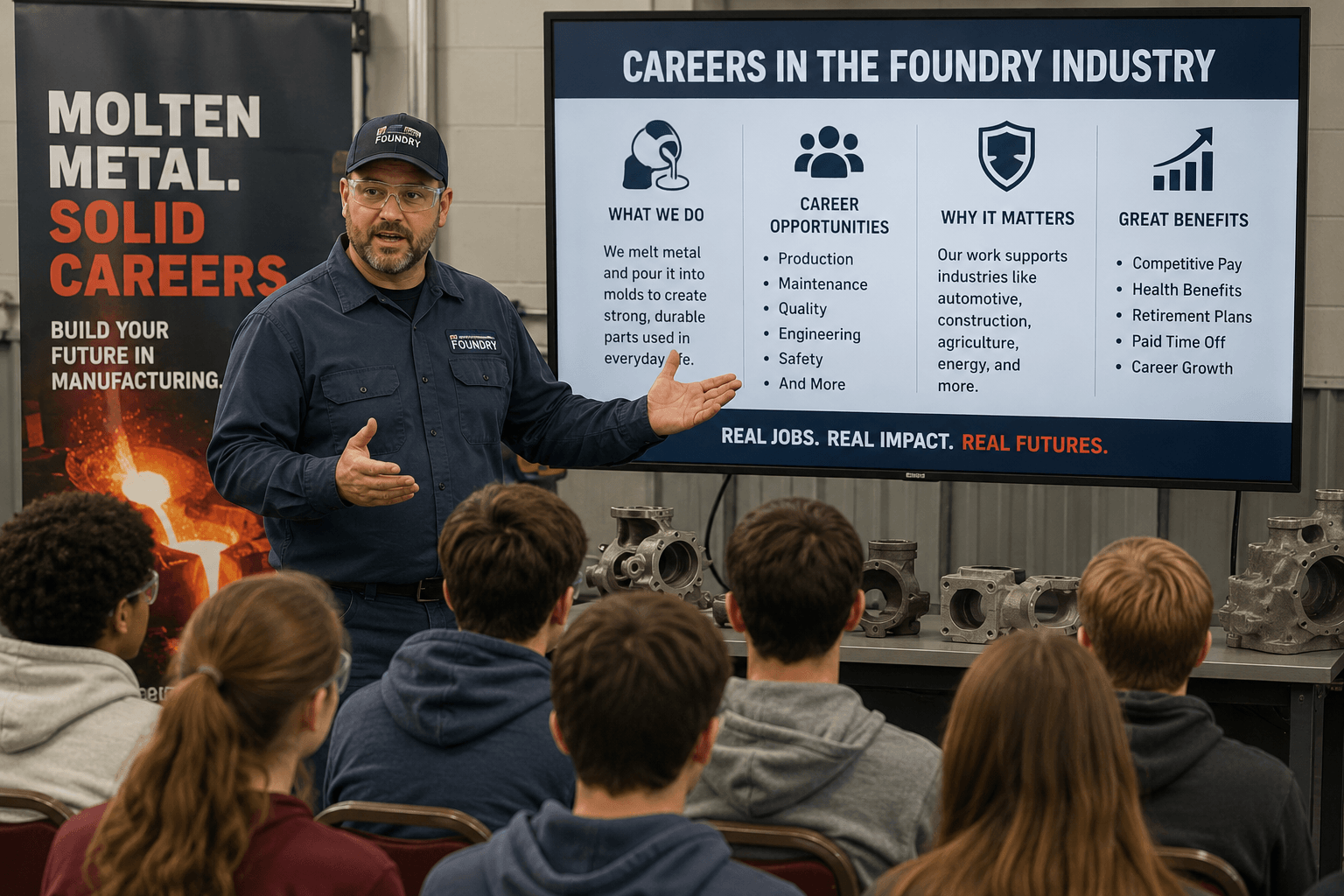 Reputation is what turns a company into an employer of choice.
When students graduate, when veterans transition into civilian careers, and when experienced workers begin considering their next opportunity, they naturally gravitate toward organizations they recognize and respect. They seek out employers that have demonstrated a genuine investment in people, not just a willingness to write a paycheck.
Building that reputation takes time. It requires leadership commitment and consistent engagement. It is not as easy as purchasing a billboard along the highway.
But it is far more effective.
The next time your company considers spending money on another recruiting advertisement, ask a different question.
What are we doing to become the kind of company people want to work for before we ever post a job opening?
The foundries that solve their workforce challenges will not necessarily be the ones offering the highest wages. They will be the ones that earn the strongest reputation in their communities. They will be the companies known for developing people, creating opportunities, and investing in the next generation.
Anyone can buy a billboard.
Not every company is willing to do the work required to become an employer of choice.