
Why Opening Your Doors Matter
If No One Knows Who You Are,
Why Would They Work for You
Many foundries spend thousands of dollars trying to attract talent. They post jobs on hiring websites, advertise openings on social media, and place "Now Hiring" signs outside their facilities. Yet when potential candidates visit their careers page or read a job description, they are greeted with little more than a list of responsibilities, qualifications, and physical requirements.
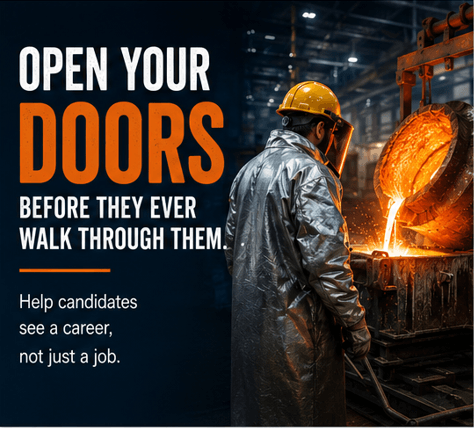 In many cases, the very first interaction a candidate has with a company feels less like an invitation and more like a legal document.
Then we wonder why people are not applying.
The reality is that most job seekers are not simply looking for a paycheck. They are looking for a place where they can belong, contribute, grow, and build a future. Before someone submits an application, they are trying to answer a fundamental question:
"Can I see myself working there?"
Unfortunately, many foundries never give them enough information to answer that question.
Your Careers Page Is Your Front Door
Think about the last time you invited someone to your home. You would not greet them by handing them a list of chores and house rules before introducing yourself. You would tell them who you are, what matters to you, and make them feel welcome.
Yet that is exactly how many companies approach recruiting.
A candidate arrives at a careers page hoping to learn about the organization and the people behind it. Instead, they find a collection of job titles and bullet points.
What is missing is the story.
- Why does your foundry exist?
- What products do you create and why do they matter?
- Who are the people who work there?
- What makes your culture different from the manufacturing company down the street?
- Why do employees stay?
- Why are they proud of what they do?
These are the questions candidates are asking, whether you answer them or not.
People Join People
One of the biggest mistakes employers make is assuming candidates are evaluating jobs. In reality, they are evaluating people.
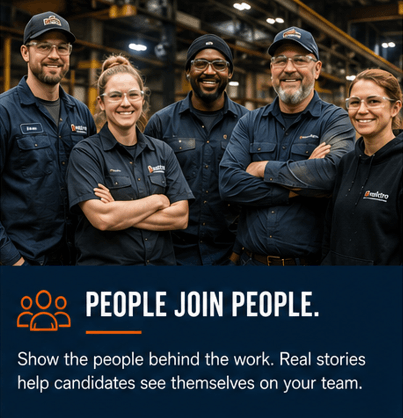 A CNC machinist is not just looking at a CNC machinist position. They are looking at the supervisor they may work for. The teammates they will work beside. The opportunities available to them in five years. The values of the organization. The way employees are treated.
People join organizations because they connect with the people and purpose behind them.
That is why some of the most effective recruiting tools are not job descriptions at all. They are employee stories.
Imagine a candidate reading about a plant manager who started as a melt operator twenty years ago. Or an engineer who joined the company directly out of college and now leads major projects. Or a maintenance technician who explains why they enjoy coming to work every day.
Those stories help candidates envision their own future.
They begin to see possibilities rather than just positions.
Stop Listing Tasks. Start Painting Pictures.
Many job descriptions focus exclusively on what the company wants.
- Must be able to lift 50 pounds.
- Must have three years of experience.
- Must be willing to work overtime.
- Must be able to perform assigned duties.
While these requirements may be necessary, they do little to inspire someone to apply.
Great recruiting content helps candidates understand what success looks like and why the work matters.
Instead of describing a melt operator as someone who monitors furnace temperatures and follows procedures, explain that they are responsible for transforming raw materials into the metal that becomes critical components for aerospace, defense, transportation, and infrastructure.
Instead of describing a quality inspector as someone who reviews specifications, explain how they help ensure customers receive products they can trust in mission-critical applications.
The work becomes more meaningful when people understand its purpose.
Purpose attracts people.
Show Them What They Are Joining
Today's candidates research companies long before they submit an application. They visit websites. They review social media channels. They search for employee feedback. They want to understand what it feels like to work there.
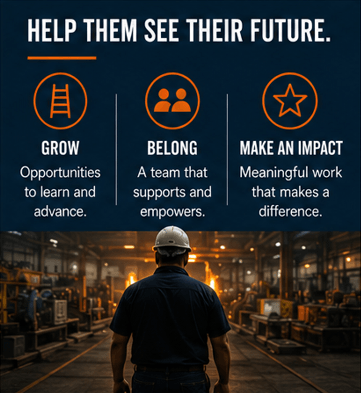 If your website only talks about products, equipment, and capabilities, you are missing an opportunity.
- Show employees working together.
- Share photos from community events.
- Highlight anniversaries, promotions, and accomplishments.
- Tell stories about apprentices who became supervisors.
- Celebrate employees who mentor new hires.
- Demonstrate that your company is more than machines and buildings.
- Show the human side of your organization.
When candidates can see the people behind the business, they are more likely to picture themselves becoming part of the team.
The Best Recruiting Question
Every foundry leader should periodically review their careers page and ask one simple question:
"If I knew nothing about this company, would I want to work here?"
Not because of the pay.
Not because of the benefits.
But because of the people, the culture, the purpose, and the opportunity.
If the answer is unclear, it may be time to open your doors a little wider.
Your careers page, job descriptions, and recruiting materials should not simply tell candidates what jobs are available. They should help candidates understand why the work matters, who they will be working alongside, and what kind of future they can build.
The best recruiting does not start when someone walks through your front door.
It starts when you open the door online and invite them to imagine themselves on the other side.