
NFFS Staff Attends TPP Program Symposium
What I Learned at the 2026 US Navy Talent Pipeline Program (TPP) Symposium
I am just two weeks into my role at NFFS, and I have already toured four foundries and spent a week at the 2026 US Navy Talent Pipeline Program (TPP) Symposium in Newport News, Virginia. It has been a lot to take in, but honestly, I would not have it any other way. 
The symposium is the one time each year when everyone comes together in the same room: TPP leadership, network coaches, facilitators, and companies that represent best practice models from across the country. This year also marked five years of the program, and the celebration felt well earned. What started with about eight interested companies has grown to more than 600 employers across the country, and that growth alone tells you something about what the program is doing right.
The four days were filled with formal discussions diving deep into tools, implementation strategies, and the mechanics of running a strong talent acquisition and retention system. But some of the most valuable learning happened over dinner and drinks, where the informal conversations gave me the chance to ask the questions I might have hesitated to raise in a room full of experienced coaches. As the newest person in the room (though with TPP, you are only ever new for a day), those dinners took the pressure off. Nobody made me feel like the newbie. Everyone was generous with their time and their hard-won knowledge, and that kind of peer learning is something you simply cannot replicate in a training manual.
At its core, what TPP is really trying to do is help companies build talent acquisition and retention into their DNA, making it second nature rather than an afterthought. Programs have end dates. What we are working toward is a mindset shift, a commitment to continuous improvement that keeps the momentum going long after any single initiative wraps up. The employers who are seeing the best results are not the ones who simply went through the motions. They are the ones who have made workforce development a permanent part of how they operate. 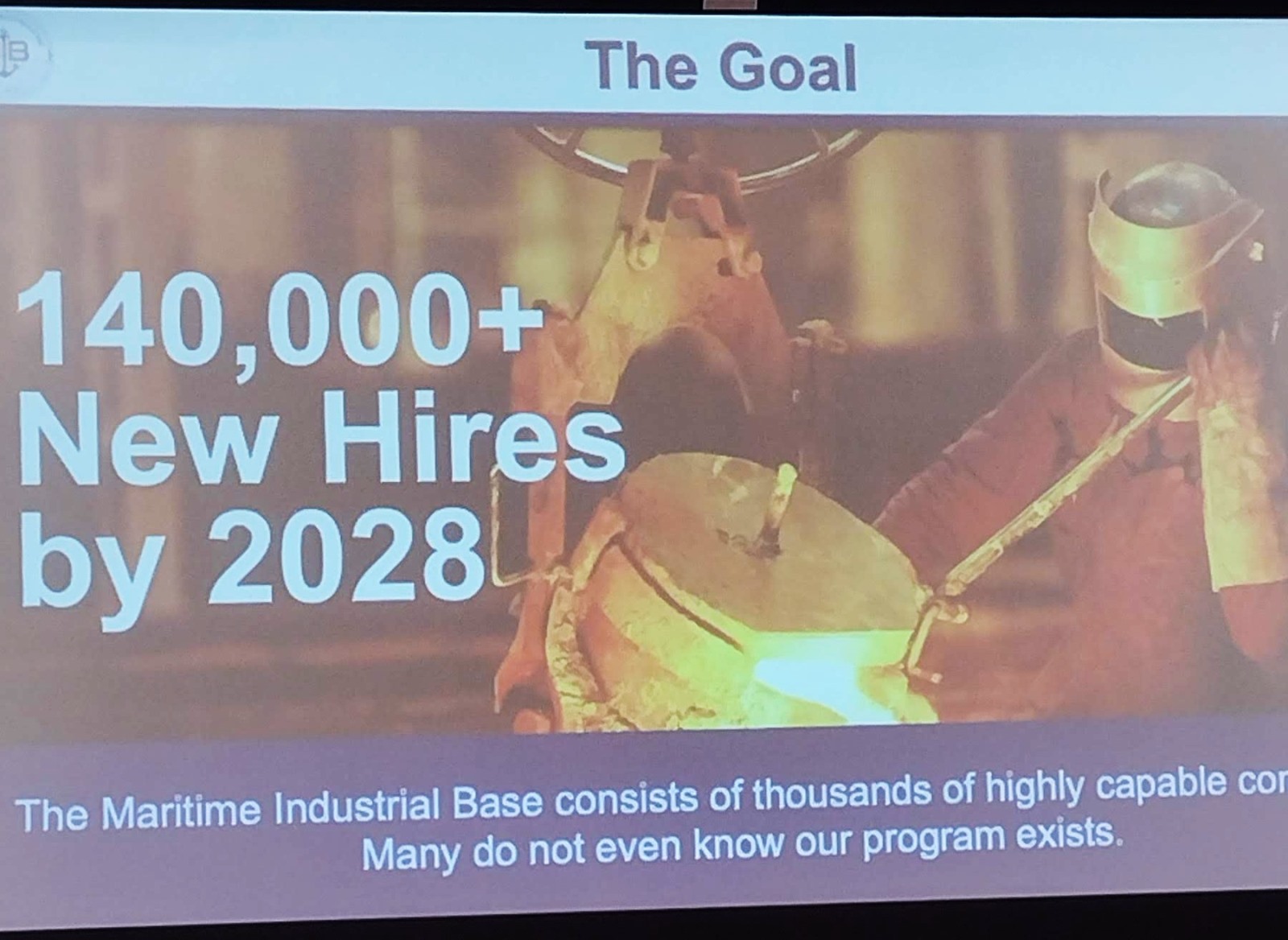
The data backs that up. The average one-year retention rate for manufacturers in TPP is over 70%, while the national average hovers closer to 50%. Employers on the program's panels shared story after story about the real difference it has made for their companies, and the common thread in every one of them was sustained effort over time.
The stakes behind all of this are significant. By 2030, manufacturing is projected to see 2.1 million job openings, including 380,000 in metal casting alone. No single program will fill every one of those seats, but TPP is built to close the gap in a meaningful way, ensuring that our defense industry, specifically the Maritime Industrial Base, can keep up with the 30-year plan to grow our naval fleet and make sure our Navy is never in a fair fight. We are proud to be part of that effort. As network coaches, we are helping meet the manufacturing needs of the Navy, and that is not something we take lightly.
That pride was on full display at the close of the symposium, when each coach shook hands with Joe Barto, the founder of the TPP program, and took an oath: "My name is X, I am a leader. My team plays to WIN!" It was a simple moment, but a powerful one. That is the message we hope to carry to every employer we work with, and one day we hope to have company leaders say those same words after their own retention training.
For NFFS, the momentum is real. We currently have 21 foundries participating in the 2026-2028 cohort, and while NFFS is still relatively new to the program, our success has been astonishing. Things have been going so well that we brought on a new network coach to keep up with the growth.
To those who have expressed interest in joining TPP but have not yet made the move: now is the time. Why wait? We are fired up, we are ready to help, and we would love to have you with us.