
Five Ways to Completely Undermine an OSHA Inspection in Your Foundry
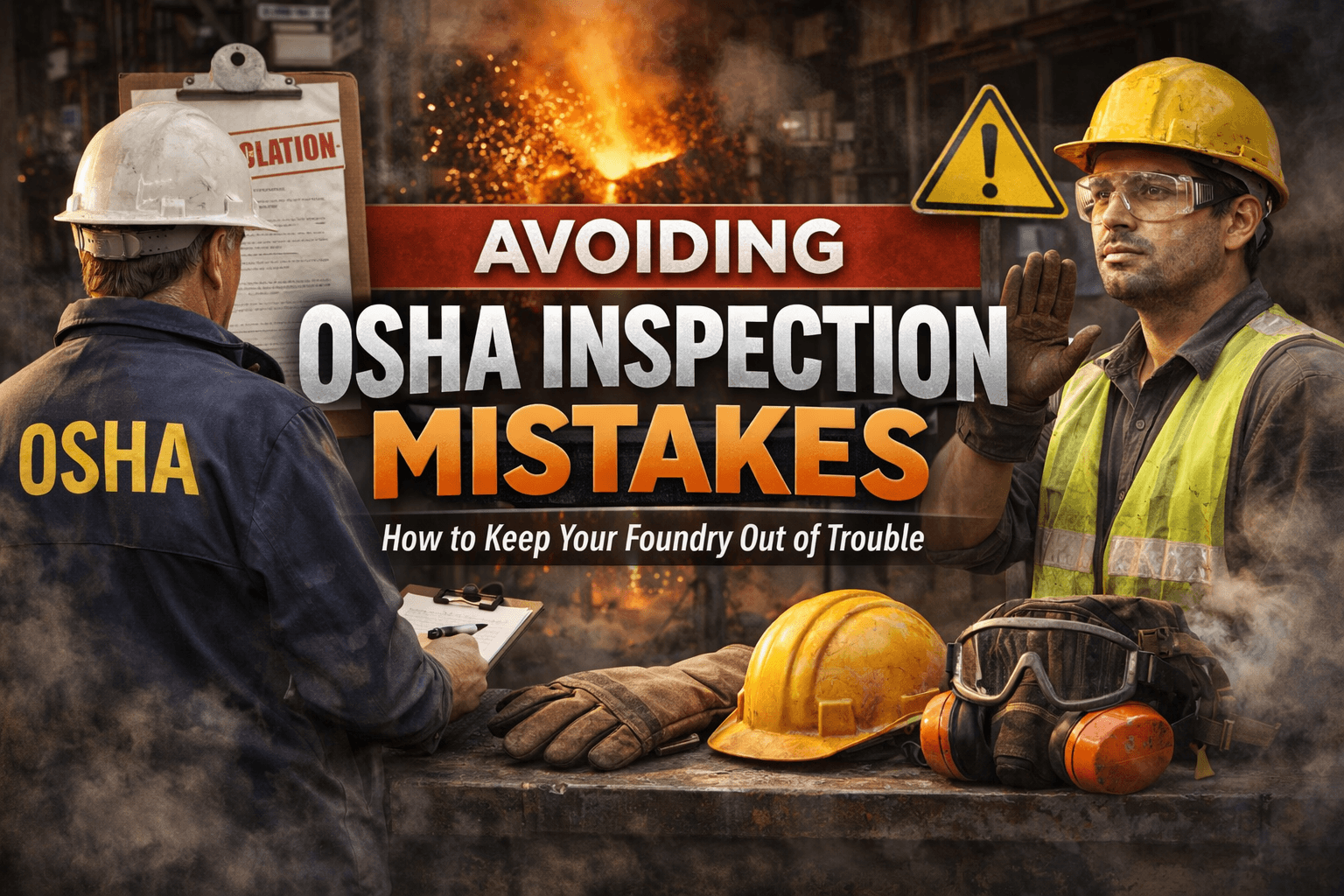 An OSHA inspection does not have to become a crisis. In many cases, the outcome is shaped as much by how a foundry responds as by the conditions on the floor. Unfortunately, some companies unintentionally make the situation worse. Below are five of the most common—and most avoidable—mistakes that can quickly turn a manageable inspection into a costly enforcement action.
1. Treating the Compliance Officer as an Adversary
Taking a defensive or confrontational posture sets the wrong tone from the outset. OSHA compliance officers are trained to observe not only physical conditions, but also management attitude and cooperation. Being dismissive, argumentative, or unprepared to engage professionally can invite deeper scrutiny and prolong the inspection. A controlled, respectful approach—without volunteering unnecessary information—is far more effective.
2. Failing to Control the Scope of the Inspection
One of the fastest ways to expand an inspection is to allow it to drift beyond its original purpose. Whether the visit is triggered by a complaint, referral, or programmed inspection, employers have the right to understand and manage the scope. Allowing unrestricted access to all areas, records, and personnel without coordination can expose unrelated issues. A designated company representative should accompany the inspector at all times and ensure the inspection remains focused and organized.
3. Poor Recordkeeping and Documentation
In foundries, documentation is often as important as physical compliance. Missing or incomplete records—such as training logs, hazard assessments, lockout/tagout procedures, respirator fit tests, or injury logs—can result in citations even if the underlying program exists. Inconsistent documentation signals weak program management and invites broader review. Records should be current, accurate, and readily accessible.
4. Lack of Employee Awareness and Training
Employees are frequently interviewed during inspections, and their responses matter. If employees are unaware of safety procedures, cannot explain required practices, or provide inconsistent answers, OSHA will question the effectiveness of the entire safety program. This is particularly critical in foundries where exposures to heat, silica, molten metal, and heavy equipment require well-understood controls. Regular, documented training—and reinforcement on the floor—is essential.
5. Trying to Fix Everything on the Fly
Attempting to correct issues during the inspection without acknowledging them properly can create credibility problems. While prompt abatement is important, scrambling to make last-minute fixes or offering explanations that do not align with observed conditions can raise red flags. It is better to acknowledge concerns, document corrective actions, and demonstrate a structured approach to resolution rather than appear reactive or disorganized.
Final Thought
OSHA inspections are not won or lost in a single moment—they reflect the overall strength of a foundry’s safety culture and management systems. The most successful organizations approach inspections with preparation, discipline, and professionalism. Avoiding these five common missteps will not guarantee a citation-free outcome, but it will significantly improve your position and demonstrate that your operation takes compliance—and employee safety—seriously.