
The Importance of Employee Recognition and Retention
As humans, we are wired to search for validation, some indication that we are on the right path. That instinct does not disappear when we walk through the doors of our workplaces. If anything, it intensifies.
Think back to the earliest feedback you ever received. In grade school, it was gold stars and stickers pressed onto your worksheet, a tangible, immediate signal that your effort was seen. A little older, and alphabetical grades appeared in red pen at the top of your paper, sometimes accompanied by a handwritten "Good job!" that you probably still remember. The feedback was timely, specific, and personal. 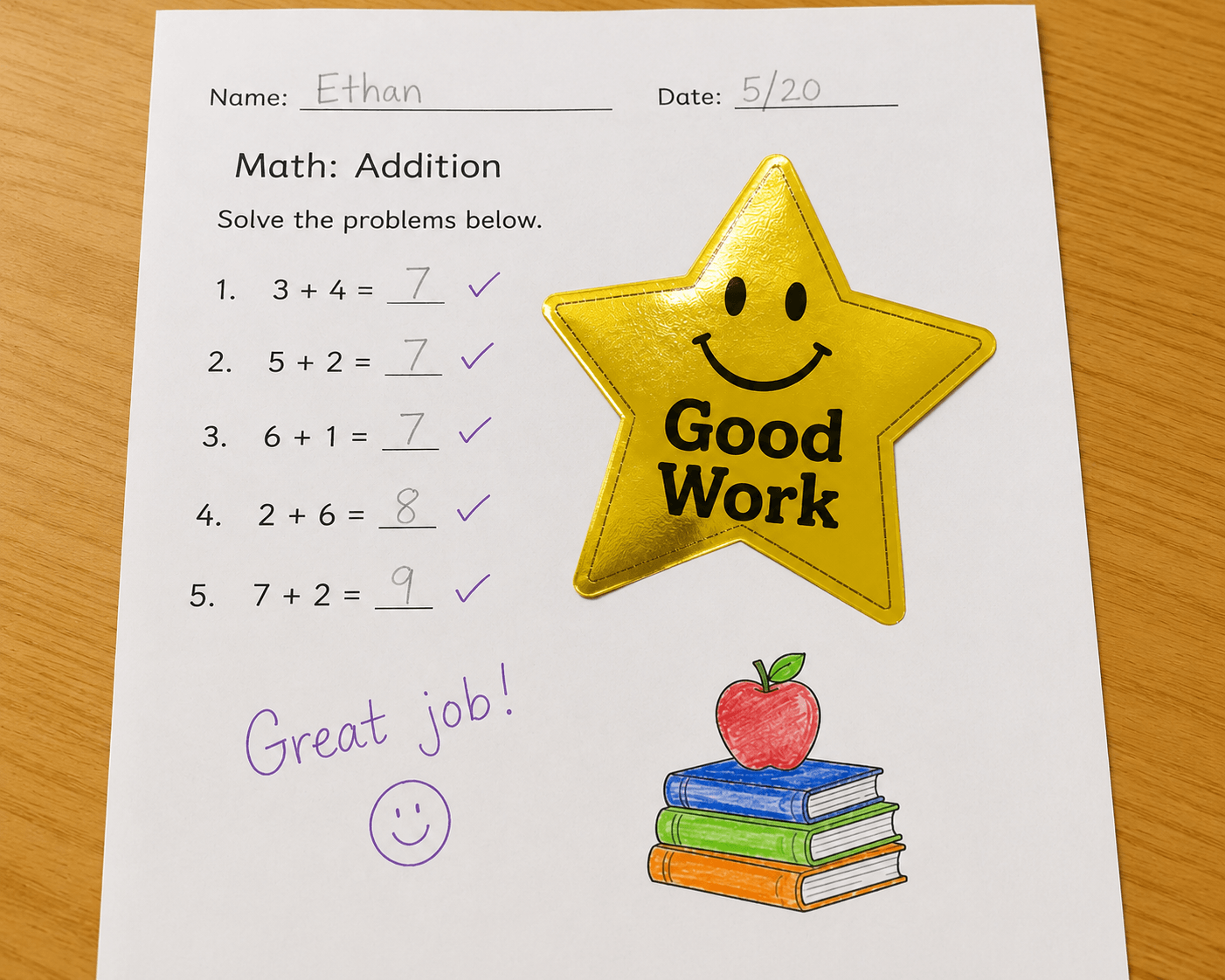
Fast-forward to the modern workplace, and what do most employees get? A yearly review. Once a year, everything good and bad is laid bare simultaneously, without the opportunity to adjust behaviors gradually, without in-the-moment coaching, and almost always with an underlying sense of stress. The worker sits across a desk and receives a sweeping summary of twelve months of effort compressed into generalizations: "You did well on this, keep doing that." Maybe the whole year is capped off with a pizza party. The picture reads as lackluster, and the lack of enthusiasm from employees is palpable.
But here is the key insight: the annual review model does not just fail to motivate, it actively undermines retention. An employee who feels invisible will not stay at your company for long. Recognition and retention are not two separate initiatives; they are two sides of the same coin. Organizations that build cultures of consistent, meaningful acknowledgment see measurably lower turnover, stronger team cohesion, and higher productivity. The cost of replacing a skilled foundry worker, in recruiting time, on-boarding, and lost institutional knowledge, far exceeds the cost of simply making that worker feel valued every day.
SMALL GESTURES, LARGE RETURNS
What if things did not have to happen that way? What if that lackluster energy could be transformed into something that actually draws people in and keeps them there?
The good news is that the highest-impact recognition tools are almost entirely free. They require attention, not budget. Genuinely learning an employee's name, not just reading it off a badge, signals that this person is an individual, not a cog in a machine. Understanding what someone's role actually involves and expressing genuine appreciation for the craft behind it takes thirty seconds and leaves a lasting impression.
Consider the research: studies consistently show that employees who feel recognized are significantly more likely to stay with their employer, recommend their workplace to others, and go above and beyond their defined responsibilities. The mechanism is straightforward: when people feel seen, they feel invested. And invested employees build the kind of institutional knowledge and team chemistry that no hiring process can quickly replicate.
It can feel overwhelming to know every detail about every person on a large team. Many managers will say they cannot possibly remember it all, and that is fine. The point is not perfection. The point is effort. Employees can tell the difference between a manager who tries and one who does not bother.
WHAT GOOD LOOKS LIKE: LESSONS FROM FIVE MEMBER FOUNDRIES
This past week, the NFFS team toured five member foundries across the Chicago and Wisconsin area ahead of our spring board meeting. What we witnessed were not elaborate recognition programs or costly perks. They were small, deliberate, human moments, and you could see the difference reflected in the attitudes of every worker we passed.
Sipi Metals Corporation. The office walls are lined with employee portraits, not awards or production metrics, but faces. Smiling, individual faces that communicate a simple message: everyone here is seen, everyone belongs, and we are all part of something larger than any single shift or order.
Meskan Foundry. The team seemed so close that even over the din of the machinery, they had developed their own shorthand. Waves, thumbs-up, high fives exchanged between workers and with the team giving us the tour. These are micro-moments that take no time and cost nothing, yet they signal belonging and mutual respect in a way no memo ever could. That sense of camaraderie does not happen by accident; it is cultivated by leaders who model it.
Woodland Aluminum. What stood out at Woodland was the simple act of pausing to acknowledge the workers around us. At each stop on the floor, the team leading our tour made a point to thank the workers directly for allowing us into their workspace, recognizing that the floor belongs to the people who operate it. That kind of deference to the craftspeople doing the work, even in a small moment, speaks volumes about the respect embedded in the culture.
Premier Aluminum. Our hosts took the time to slow down and introduce each worker we encountered, explaining their specific role with genuine pride. They described how each person's skilled hands move through practiced motions with ease and precision, framing workers not as labor, but as true craftsmen. A brief moment of thanks followed each interaction, reinforcing a culture where expertise is celebrated rather than assumed.
H. Kramer & Company. H. Kramer was a particular highlight of the tour. It seemed as if Howard was able to greet each of the roughly 70 workers individually, with high fives, fist bumps, pats on the shoulder, and genuine hugs to employees he passed on the floor. Every single one of them smiled bigger afterward. The foundry recently named a new furnace after a long-tenured worker, a gesture that honors years of dedication in a permanent and visible way. Several employees spoke to our group about everything from safety compliance to day-to-day operations, and the pride behind their words was unmistakable. This is what it looks like when recognition is not an event: it is a way of operating.
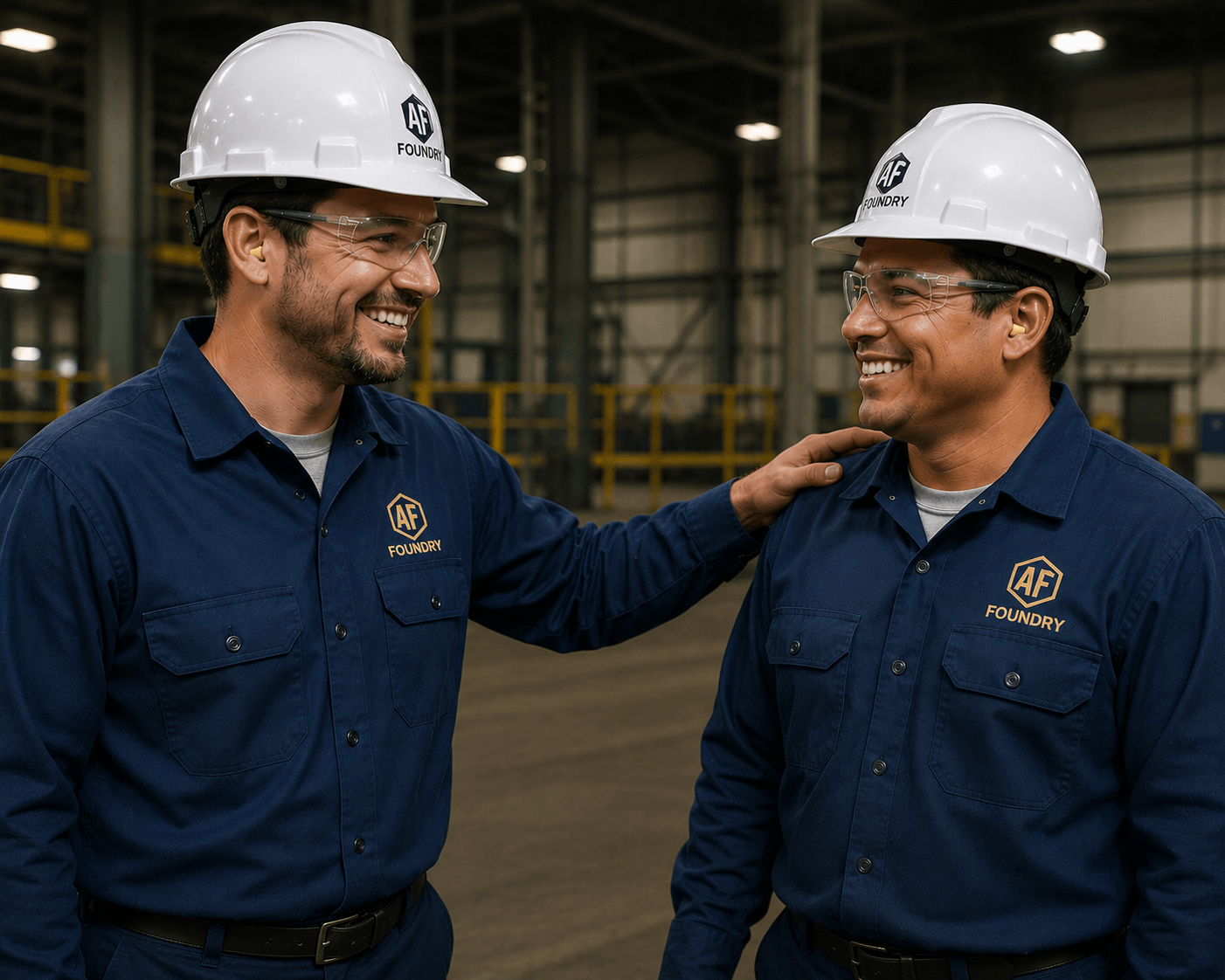
These small differences add up to something profound: they make someone feel like part of a team, and part of something bigger than themselves. After several of these tours, even a visiting guest like me was ready to sign on. That is the power of a workplace culture built on genuine recognition.
Retention is not a mystery. People do not leave good pay, they leave environments where they feel invisible or undervalued. Build a culture where showing up matters, where names are learned, where craft is celebrated, and where small moments of human connection are woven into every day, and you will find that people choose to stay. Not because they have to, but because they want to.
We all need each other. That is not a soft sentiment, it is a foundational business truth. Instill it in your workplace, and watch what grows.