
DLA Weapons Support Reshapes Supply Chain Strategy to Strengthen Casting Industry Readiness
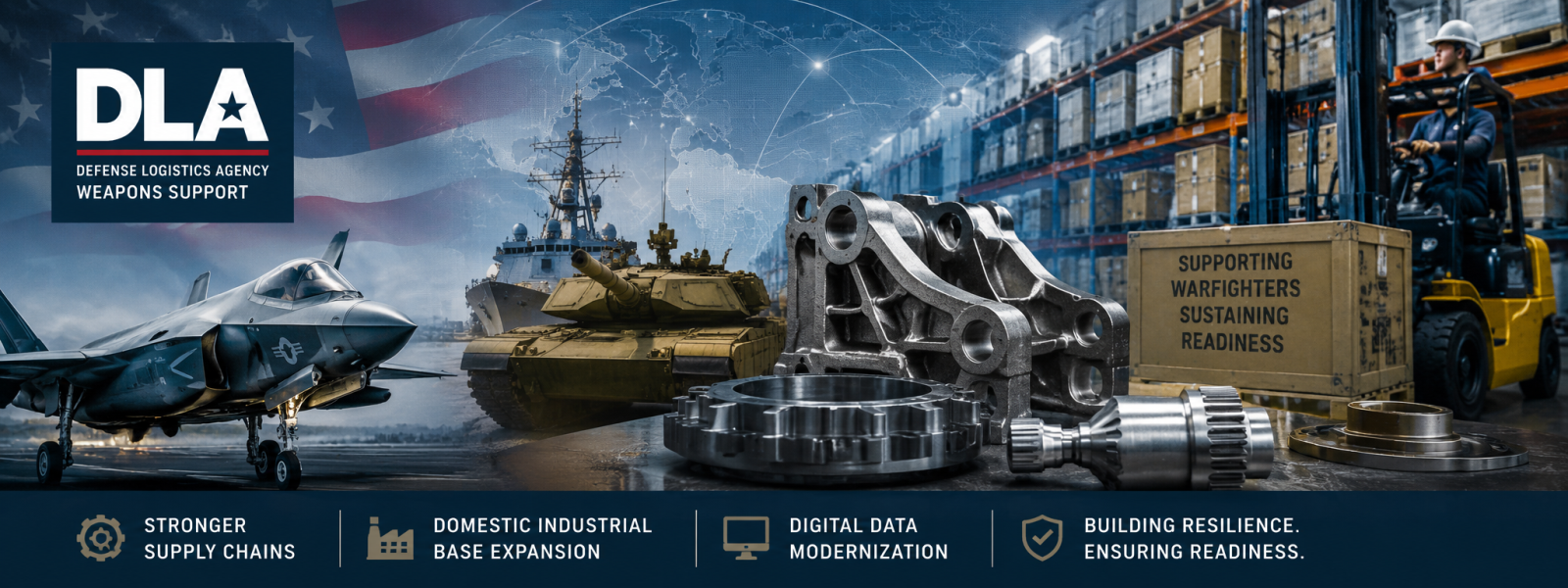 Defense Logistics Agency Consolidates Operations and Expands Industrial Base to Reduce Long Lead Times for Critical Components
The Defense Logistics Agency (DLA) is undertaking a major transformation of its supply chain operations to address persistent long lead times, supply bottlenecks, and diminishing manufacturing sources affecting critical casting, forging, and machined components across the U.S. defense industrial base.
At the center of this effort is the consolidation of multiple operational functions under DLA Weapons Support, a move designed to streamline procurement activities, improve technical data management, accelerate sourcing decisions, and strengthen collaboration with domestic manufacturers.
For companies operating within the casting, forging, and machine shop sectors, these changes signal both new opportunities and evolving expectations for participation in defense supply chains.
Strategic Realignment Under DLA Weapons Support
DLA’s restructuring initiative is focused on improving responsiveness and resilience throughout the weapons systems sustainment process. Historically, separate organizational divisions managed varying categories of components, procurement actions, engineering support, and technical data.
The newly merged structure under DLA Weapons Support is intended to:
- Centralize management of critical weapon system parts
- Improve communication between engineering, procurement, and supplier management teams
- Reduce duplication of sourcing efforts
- Accelerate qualification and procurement timelines
- Increase visibility into inventory and production requirements
- Enhance support for aging military platforms
This integrated model allows DLA to better align strategic sourcing decisions with real-time operational demands while improving coordination across multiple commodity areas.
The consolidation is particularly important for castings and forgings because many of these components support legacy weapon systems where original manufacturers no longer exist, technical drawings are outdated, or domestic production capacity has declined.
Addressing Long Lead Times and Supply Bottlenecks
One of DLA’s primary concerns involves the extended lead times associated with highly specialized cast and forged components. In many cases, procurement timelines for critical parts have stretched from several months to well over a year due to:
- Limited domestic manufacturing sources
- Obsolete tooling and patterns
- Capacity constraints within foundries and forge shops
- Material shortages
- Aging technical data packages
- Complex qualification requirements
- Dependence on foreign supply chains
These challenges directly affect military readiness by delaying maintenance, overhaul, and sustainment activities for aircraft, ground combat systems, naval platforms, and weapons systems.
DLA Weapons Support is responding through a combination of operational modernization initiatives and industrial base expansion efforts designed to shorten procurement cycles and reduce dependency on fragile supply networks.
Digitization of Technical Data Packages
A major component of the modernization effort involves digitizing legacy technical data packages (TDPs).
Many defense-related castings and forgings were originally designed decades ago using paper drawings, outdated specifications, or incomplete manufacturing documentation. In numerous cases, existing data packages are difficult to interpret, unavailable in digital formats, or no longer aligned with modern manufacturing processes.
DLA is investing in the conversion and modernization of technical data to:
- Improve accessibility for suppliers
- Support rapid manufacturing and requalification
- Reduce engineering ambiguities
- Enable advanced manufacturing methods
- Improve quality assurance consistency
- Preserve critical intellectual and manufacturing knowledge
Digitized data packages allow suppliers to more efficiently review opportunities, estimate production requirements, and accelerate first article manufacturing. For machine shops and foundries, improved technical data quality can significantly reduce quoting uncertainty and engineering risk.
Domestic Supplier Base Expansion Becomes a Priority
A central objective of the DLA Weapons Support transformation is the expansion of the domestic supplier base.
The defense industrial base has experienced steady consolidation over several decades, resulting in fewer qualified suppliers capable of producing military-grade castings, forgings, and precision machined components.
DLA is actively seeking to broaden participation among:
- Small businesses
- Mid-sized manufacturers
- Regional machine shops
- Specialty foundries
- Closed-die forging operations
- CNC machining providers
- Advanced manufacturing firms
This effort also aligns with broader Department of Defense priorities focused on reshoring critical manufacturing capabilities and reducing dependency on foreign sources for strategic materials and components.
For many suppliers, the merged DLA Weapons Support organization may simplify engagement processes by improving visibility into procurement requirements and creating more centralized supplier interaction points.
Opportunities for Casting, Forging, and Machine Shop Manufacturers
The evolving DLA supply chain strategy presents significant opportunities for manufacturers capable of supporting defense sustainment programs. Areas of growing demand may include:
1. Legacy Platform Sustainment
Many military systems remain in service far longer than originally anticipated. Suppliers capable of reproducing obsolete or hard-to-source components may find increased opportunities for long-term sustainment contracts.
2. Reverse Engineering Support
Manufacturers with engineering capabilities to recreate missing or incomplete technical data may become valuable partners in sustaining legacy systems.
3. Short-Run and Low-Volume Production
Defense requirements frequently involve specialized low-volume production runs that require flexible manufacturing capabilities.
4. Rapid Response Manufacturing
Suppliers that can support accelerated production schedules and emergency sustainment needs may benefit from increased demand.
Increased Importance of Supplier Readiness and Compliance
Manufacturers seeking to support DLA Weapons Support programs should anticipate increasing emphasis on:
- Digital data compatibility
- Cybersecurity compliance
- Traceability requirements
- Quality certifications
- Process documentation
- Material verification
- First article inspection readiness
- Production scalability
Companies that proactively invest in compliance infrastructure and digital manufacturing capabilities may be better positioned to participate in future defense sourcing initiatives.
Building a More Resilient Defense Supply Chain
The restructuring under DLA Weapons Support represents more than an internal organizational change. It reflects a broader Department of Defense strategy aimed at building a more agile, resilient, and domestically supported supply chain for critical defense components.
Casting, forging, and machining suppliers remain foundational to military readiness. From armored vehicle systems and naval propulsion components to aerospace structures and weapons assemblies, these manufacturing sectors provide essential capabilities that cannot be rapidly replaced once lost.
By consolidating operations, modernizing technical data, embracing advanced manufacturing technologies, and expanding domestic supplier participation, DLA is positioning itself to better manage future supply chain disruptions while supporting long-term sustainment objectives.