
"Bridging the Generations" Webinar Recap
Bridging the Generations: Turning
Workforce Differences into Foundry Strength
Walk through any foundry today and you will see something that has never existed before in manufacturing. Five generations are now working side by side. Traditionalists, Baby Boomers, Gen X, Millennials, and Gen Z share the shop floor, offices, and leadership pipeline. While this diversity brings deep experience, fresh ideas, and technological fluency, it also creates leadership challenges when communication styles, expectations, and motivations do not align.
That reality was the focus of Bridging the Generations, a recent NFFS workforce development webinar hosted by Bill Padnos, Director of Workforce Development for the Non-Ferrous Founders' Society. The session featured Jeremiah Sinks, Senior Services Manager for Leadership Development at the Purdue Manufacturing Extension Partnership, who shared practical, shop floor relevant strategies for leading across generations in today’s manufacturing environment.
Rather than treating generational differences as a problem to be solved, the webinar challenged leaders to view them as a natural evolution of the workforce that requires a more adaptive leadership mindset.
One Workforce, Many Perspectives
At the center of the discussion was a simple but critical question. How do leaders communicate effectively with a workforce shaped by dramatically different life experiences?
Each generation entered the workforce under different economic conditions, social norms, and technological realities. Those formative experiences influence how people respond to feedback, authority, accountability, and opportunity. Traditionalists often value face to face communication and perseverance. Baby Boomers bring deep institutional knowledge and strong team building skills shaped by loyalty and competition. Gen X employees tend to be independent, adaptable, and direct. Millennials often seek collaboration, structure, and purpose. Gen Z, as true digital natives, expect clarity, frequent feedback, and meaningful work from the start.
Problems arise when leaders assume everyone should respond to the same leadership approach. What motivates one generation can easily disengage another.
Leadership That Adapts to People
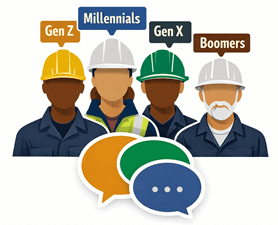 Two leadership principles anchored the conversation throughout the webinar. The first is knowing your people. Leaders must understand where individuals come from, what motivates them, and how they prefer to communicate. The second is meeting people where they are rather than expecting everyone to conform to one leadership model.
Effective leadership flows upward. Individual performance drives team performance, and team performance ultimately reflects leadership performance. When leaders fail to adapt, disengagement is often mislabeled as a workforce issue rather than recognized as a leadership systems gap.
This challenge is becoming more urgent. Since 2019 and 2020, more than half of the available workforce has been made up of Millennials and Gen Z. As Baby Boomers retire, understanding and engaging younger generations is no longer optional for foundries that want to remain productive and competitive.
Leadership Starts with Self Assessment
A powerful theme of the webinar was the importance of leaders looking inward first. Participants were encouraged to assess whether they have truly set their teams up for success. That includes providing real training rather than informal hand offs, ensuring employees have the tools they need to do their jobs, and granting both responsibility and authority instead of accountability without control.
Jeremiah also emphasized adjusting leadership posture as teams develop. Early in a team’s life, leaders need to be more directive. As skills and confidence grow, collaboration becomes essential. With high performing teams, effective leaders step back rather than micromanage. Many engagement challenges are not generational issues at all, but failures to evolve leadership style as teams mature.
Building a Culture That Engages Every Generation
Engagement is built through daily leadership behaviors, not one time initiatives. Encouraging experimentation, allowing people to learn from mistakes, and recognizing what employees do right all contribute to an environment where people feel valued. Managing by exception, focusing only on mistakes, or assuming one motivational approach fits everyone can quietly push employees toward disengagement.
Each generation sends different signals when leadership is not working. Gen X disengages when autonomy is removed. Millennials disengage when feedback disappears. Gen Z disengages quickly when expectations are unclear or onboarding is weak. These are not generational flaws. They are indicators that leadership systems need adjustment.
From Manager to Coach
The key takeaway from Bridging the Generations was clear. Generational differences are not dangerous. Ignoring them is.
The most effective leaders shift their mindset from manager to coach. They focus on developing people, adapting communication, and building systems that allow teams to succeed. When leaders understand generational differences and meet people where they are, friction becomes collaboration and diversity of perspective becomes a competitive advantage.
Download the Webinar Presentation
The PowerPoint presentation used during the Bridging the Generations webinar is available for download and includes generational overviews, leadership frameworks, and practical tools discussed during the session.