
ITAR Fundamentals: What Every Foundry Should Know
Traffic in Arms Regulations (ITAR)
For foundries supplying cast metal components into the defense supply chain, compliance is not optional. One of the most important regulatory frameworks governing this work is the International Traffic in Arms Regulations (ITAR).
What is ITAR?
ITAR stands for the International Traffic in Arms Regulations, a set of U.S. government rules codified in Title 22 of the Code of Federal Regulations, Parts 120 through 130. ITAR is administered by the Directorate of Defense Trade Controls (DDTC), an office within the U.S. Department of State. These regulations implement the Arms Export Control Act (AECA), which controls the export and temporary import of defense-related articles, services, and technical data.
At its core, ITAR governs how sensitive military technologies and information are handled, shared, and transferred, including within the United States when foreign persons are involved.
Why ITAR Applies to Foundries
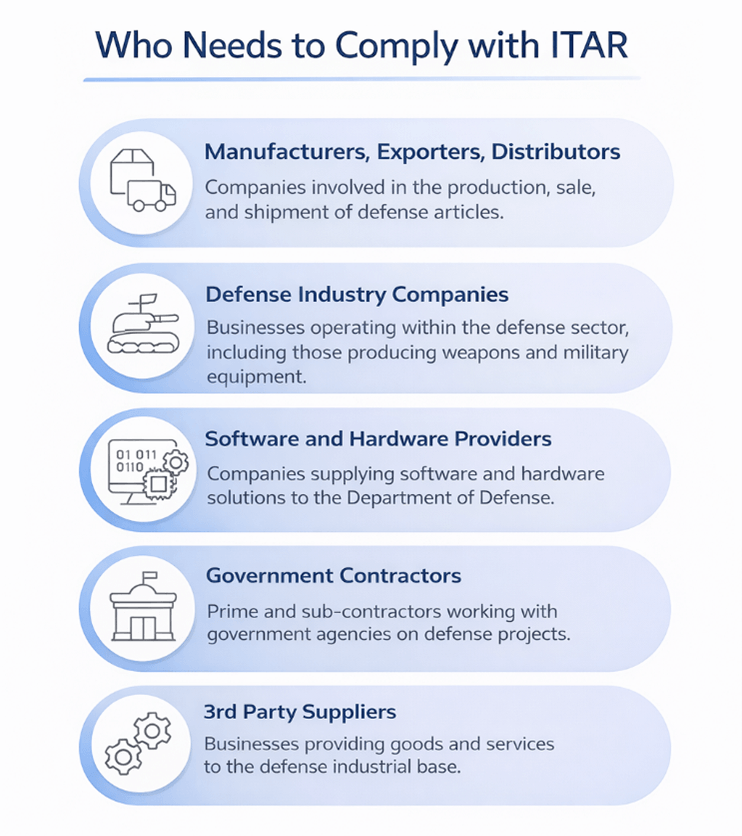
Many castings produced for the Department of Defense (DoD) fall under ITAR because they are components of defense articles listed on the United States Munitions List (USML). Even if a casting itself seems simple, the technical drawings, specifications, or end-use application may still be controlled.
For foundries, ITAR typically applies in three key areas:
- Technical Data Control: Engineering drawings, material specifications, and process requirements may be ITAR-controlled. Access must be restricted to authorized U.S. persons.
- Foreign Person Access: Non-U.S. persons cannot access ITAR-controlled data or processes without authorization, even if they are employees.
- Export Controls: Shipping cast components, tooling, or even sharing data with overseas partners can require licensing.
This aligns with broader defense data controls. For example, technical drawings are often restricted and only accessible to certified companies under programs like the Joint Certification Program (JCP). You can learn more about JCP in the JCP Knowledge Brief.
Operational Impact on Foundries
ITAR compliance is not just a legal requirement; it directly affects daily operations:
- Shop floor access and visitor controls
- Data storage and cybersecurity practices
- Supplier and subcontractor selection
- Hiring and workforce management
Failure to comply can result in significant penalties, loss of contracts, and reputational damage.
Where Foundries Get Tripped Up
Common gaps include:
- Assuming castings are not controlled because they are “just metal parts”
- Sharing drawings with overseas tooling or machining partners without authorization
- Allowing uncontrolled access to technical data on shared systems
- Not properly classifying parts against the USML
These issues often arise because ITAR touches multiple functions, from engineering to procurement to IT.
Getting Ahead of ITAR Compliance
The foundries that succeed in defense work treat ITAR as part of their operational foundation, not an afterthought. That includes:
- Establishing internal controls for technical data
- Training employees in export control requirements
- Vetting suppliers for compliance readiness
- Implementing access restrictions tied to citizenship status
Understanding ITAR early allows foundries to compete more effectively and avoid costly delays when pursuing defense contracts.
Learn More
This overview only scratches the surface. For a deeper, practical breakdown tailored to casting suppliers, download the ITAR Knowledge Brief to understand how these regulations apply across quoting, production, and delivery.
Find government contracting opportunities on ICON, visit iconportal.com to get started.