
The TPP Is Not A Program, Its a System
Why that distinction changes everything for your foundry
If you have heard of the US Navy's Talent Pipeline Program (TPP) and thought of it as just another workforce initiative, a checklist to complete, a box to check, it is time to look again. TPP is something fundamentally different, and understanding that difference could be one of the most valuable shifts in thinking your company makes this year. The question is not whether you have signed up. It is whether you have built the capability.
TPP is a system, an integrated, ongoing approach to how your foundry finds, develops, and keeps skilled workers. And as manufacturing demand continues to grow, having a real talent system in place will not just be helpful. It will be essential.
For years, the default hiring approach across American manufacturing has been what TPP calls "post and hope": list an opening, wait for applicants, and hope someone qualified walks through the door. That worked when the labor pool was deep.
That world is gone.
The Navy's Submarine Industrial Base is targeting a 5x increase in new construction submarine capacity, with more than 130,000 skilled trade hires needed over the next decade. Meeting that demand requires something more than a job posting. 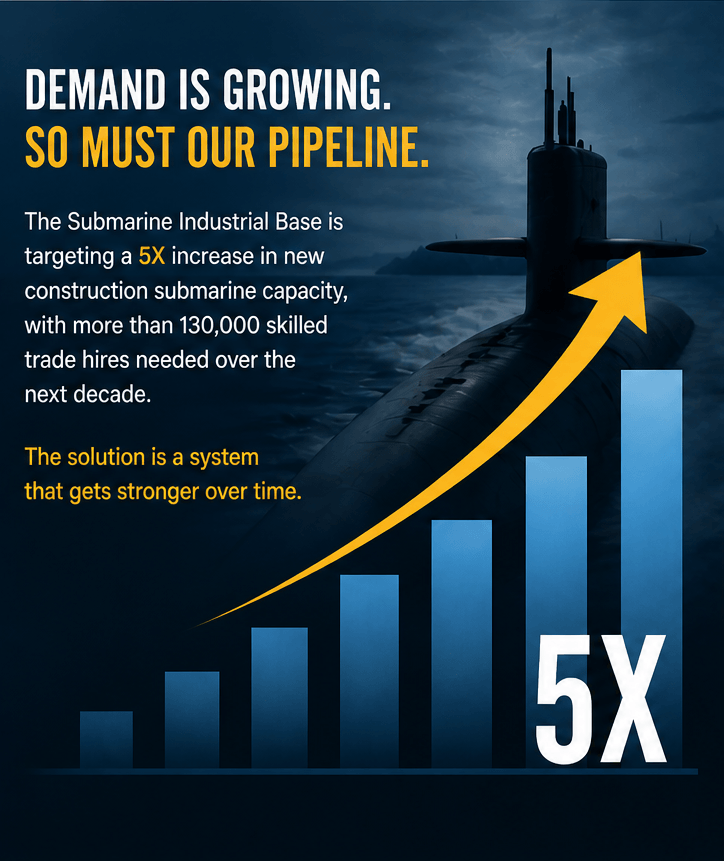
A program addresses that problem once.
A process addresses it continuously.
TPP gives foundries a repeatable process for finding, evaluating, and bringing in the right people, one that gets sharper the longer it runs. Rather than starting from scratch every time a position opens, foundries build a consistent approach they can rely on and refine over time. That also means the change does not hit all at once. TPP is built around gradual, measurable progress, so foundries can make improvements incrementally, integrating it into their everyday business practices as a management discipline that runs alongside everything else they do.
The compounding effect is where the real value shows up. Foundries that have been running TPP as an ongoing process are not just filling roles faster. They are seeing stronger candidate quality over time, less scrambling when demand spikes, and a recruiting operation that gets more efficient the longer it runs. Each hire, each cohort, each round of feedback makes the next one better. And the benefits do not stop at the front door. When hiring is reactive, on-boarding tends to be too, and workers who feel thrown into a role without support are the first to leave. A consistent process changes that. Foundries using TPP are building clearer pathways for new hires, better on-boarding experiences, and a workplace people are more likely to stay in. Retention improves not just because the right people are being recruited, but because the environment they are walking into is more prepared to receive them. 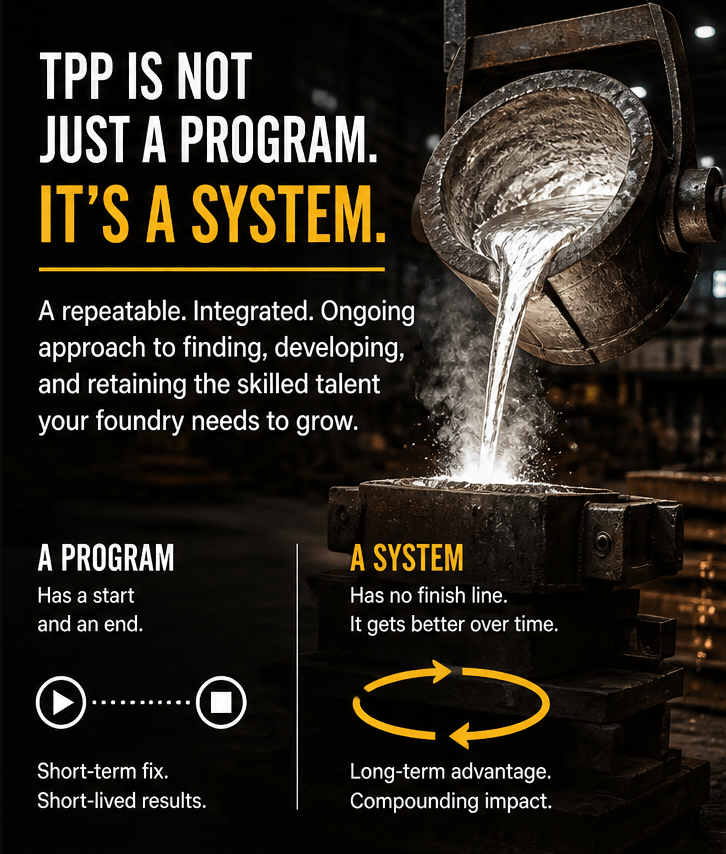
Programs end.
Systems compound.
The foundries treating TPP as part of how they operate, not something separate from it, are building an advantage that grows over time.
To find out how TPP coould apply to your operation, reach out to Bill Padnos at bill@nffs.org or Erin Boehm at erinb@nffs.org visit nffs.org/tpp.