
Why Foundries Can Not Afford To Lose Judgement
Legacy at Work: Empowering
Foundry Veterans to Mentor
Webinar Recap with Practical Next Steps
Foundries run because the work gets done. They run well because people know what “right” looks like, especially when something feels off. That was the through-line of the NFFS Workforce Development Webinar Legacy at Work: Empowering Foundry Veterans to Mentor , hosted by Bill Padnos, Director of Workforce Development for the Non-Ferrous Founders’ Society, featuring David Rea, Managing Director of Organizational Development Consulting at Catalyst Connection.
David opened with a scenario every foundry recognizes. The floor is humming, orders are lined up, the day feels routine and then the key person does not show up. The work still moves, but confidence drops. Setups take longer. People hesitate. Questions start stacking up. Not because the team is incapable, but because they are no longer sure what “right” looks like without the person who quietly sets the standard.
That is when the real risk appears. As David emphasized throughout the session, the biggest loss is not headcount. It is judgment.
The invisible asset you cannot replace overnight
Judgment is built through years on the shop floor. It is pattern recognition, “feel,” the ability to hear a subtle change, catch a problem early, and know when to stop instead of pushing through. It is learned through mistakes, recoveries, near-misses, and countless small course corrections that never make it into an SOP.
You can hire for skill and train a process. You cannot instantly replace judgment. If that knowledge leaves before it is passed on, it is gone for good and the organization pays for it again through relearning.
Mentoring is operational risk control
 A key shift David asked leaders to make is to stop treating mentoring as a “nice culture thing” and start seeing it as risk control. Passing down judgment protects quality, safety, throughput, customer confidence, and profitability. It also reduces the reactive firefighting that so many supervisors live in when the organization loses experience and has to solve the same problems repeatedly.
He made a point that resonated with many attendees: leaders often feel they do not have time to mentor because it pulls people off the floor. But the time spent now prevents far more time later in scrap, rework, downtime, overtime, and preventable safety incidents.
Mentors are not trainers
David also drew a clear line between training and mentoring. Training often focuses on compliance and checking boxes. Mentoring is about continuity and transferring judgment through real work, in real time, on the floor. This is not about turning veteran employees into classroom instructors. It is about keeping the standard alive when conditions change.
A simple structure that works
Rather than building a huge program, David recommended a practical framework: capture, mentor, reinforce. Capture the knowledge that is not documented. Mentor by pairing people around real work so knowledge becomes judgment. Reinforce until it becomes habit, because without reinforcement, learning fades and the organization ends up back where it started.
Just as important, he advised starting small and precisely. If everything is a priority, nothing is. Begin where experience matters most, where one person’s absence immediately slows work or increases risk. Prove success in one area, then scale.
The “mentor ask” and why approach matters
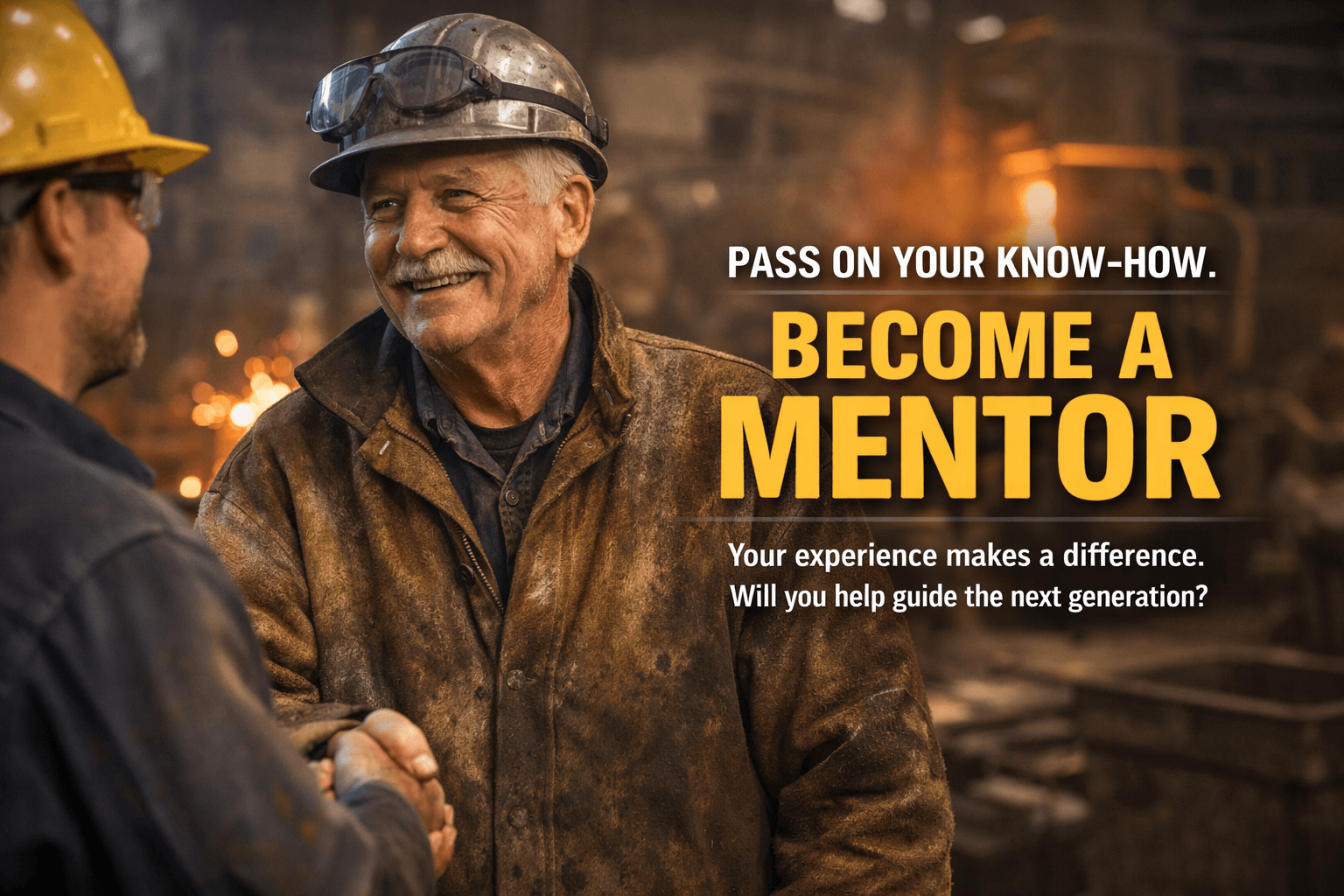 In the Q&A, Scott Ross asked whether it matters if the mentoring request comes from upper management or a direct supervisor. David’s answer was practical: the “why” must come from leadership, but the ask should come from whoever has the strongest relationship with the individual. He cautioned against making it a public display and recommended a respectful, private conversation.
David also warned against making mentoring transactional. Throwing money at the request can turn it into a business deal and reduce the sense of pride and purpose. Recognition and respect are more powerful, especially when the message is clear: mentoring is not about replacement. It is about building legacy.
Questions that unlock judgment
One of the most useful tools David offered was a set of questions that draw out judgment instead of procedures: what do new people usually miss, what mistake causes the most trouble, and what took you the longest to learn the hard way. These are not “interview questions” as much as conversation starters that signal respect and capture the stories behind the lessons.
An added benefit: mentoring strengthens employer brand
David also connected mentoring to attracting talent. Many manufacturers have strong people practices, but nobody outside the four walls knows it. Mentoring, coaching, development, and apprenticeships are not just internal systems. They are part of the employee experience and can become a real advantage when communicated through recruiting, job postings, websites, and social media.
What to do next: a practical path forward
Start by identifying where judgment protects the most value in your operation. Choose one role where the absence of a key person quickly creates hesitation, slower setups, quality risk, or safety risk. Then choose a mentor based on credibility and trust, not job title. The best mentor is usually the person everyone naturally seeks out when something does not look right.
Make the ask privately and respectfully, and frame it as recognition. The goal is to help the individual feel valued for what they know, not threatened by change. Position mentoring as legacy, as the way the trade survives and the way the standard continues long after one person is gone.
Next, do a focused “knowledge capture” conversation using the judgment-based questions from the webinar. Keep it simple. Capture the watch-fors, the common misses, and the stories behind the hard-earned lessons. Then build mentoring into real work in small, protected blocks of time. Finally, reinforce the learning by letting the mentee try the task while the mentor observes, corrects, and asks “why” questions until good decisions become habit.
If you do this for one critical role and measure the result, you will have a model you can repeat across the plant. The win is not just smoother operations. It is preserved judgment, reduced risk, stronger teams, and a workforce legacy that does not walk out the door.